Introduction
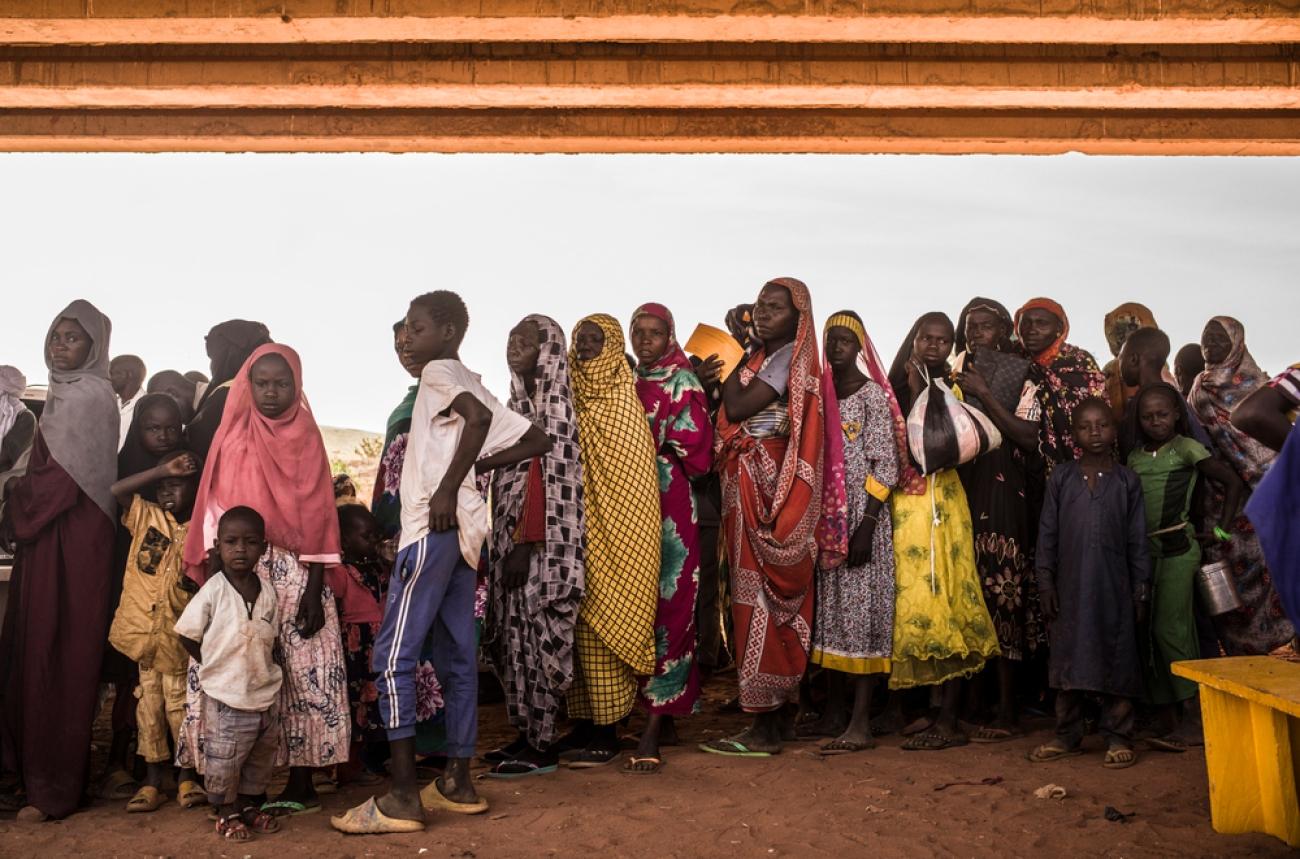
On 15 April 2023, Sudan plunged once again into war, with roots stretching back decades. The fighting reignited a conflict whose embers had never truly died out. In the capital, Khartoum, the regular army openly clashed with a paramilitary group as two generals, former allies, vied for power. They dragged the people of Sudan into a conflict in which political stakes, ethnic divisions, and international power struggles were intertwined.
The violence took on a particularly harrowing dimension in the western region of Darfur: massacres, mass violence, ethnic targeting, and forced displacement.
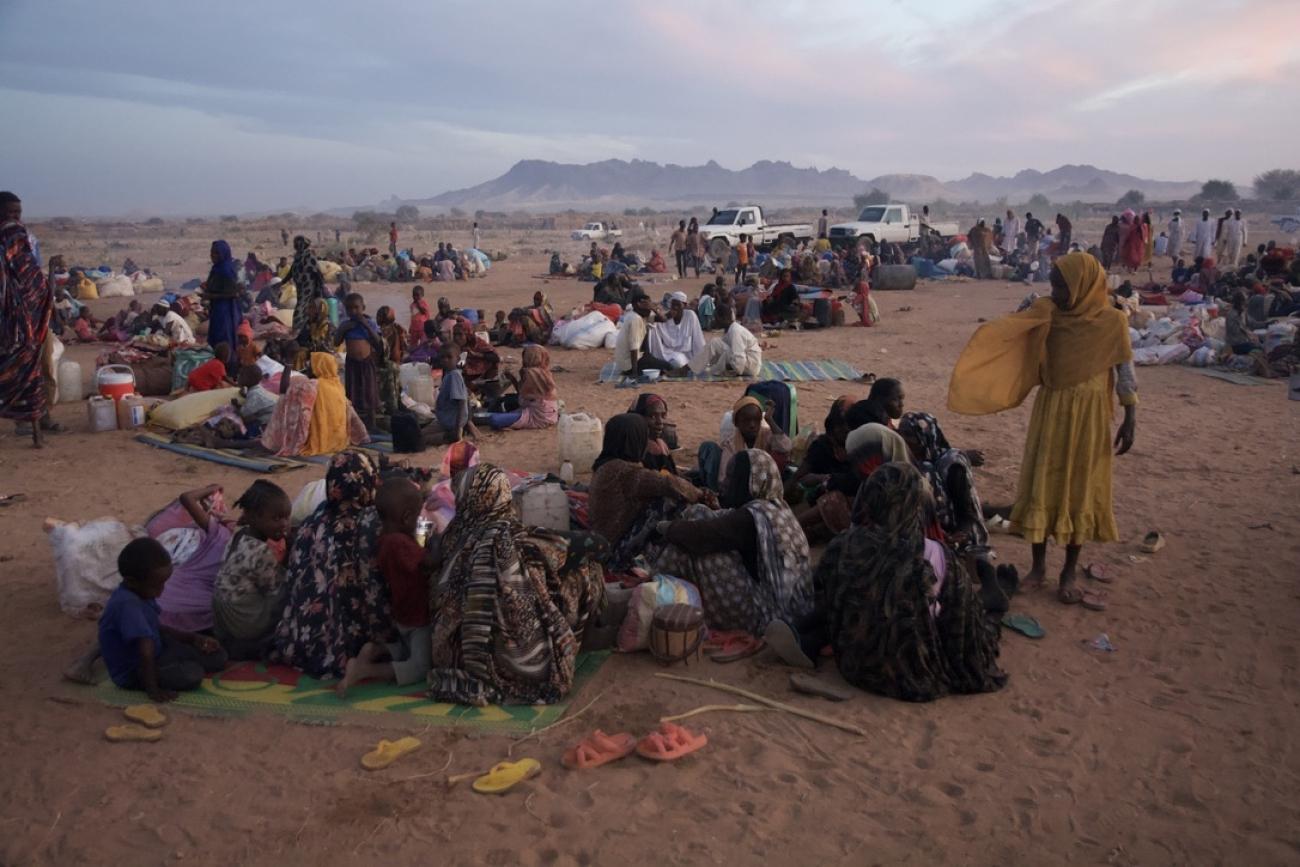
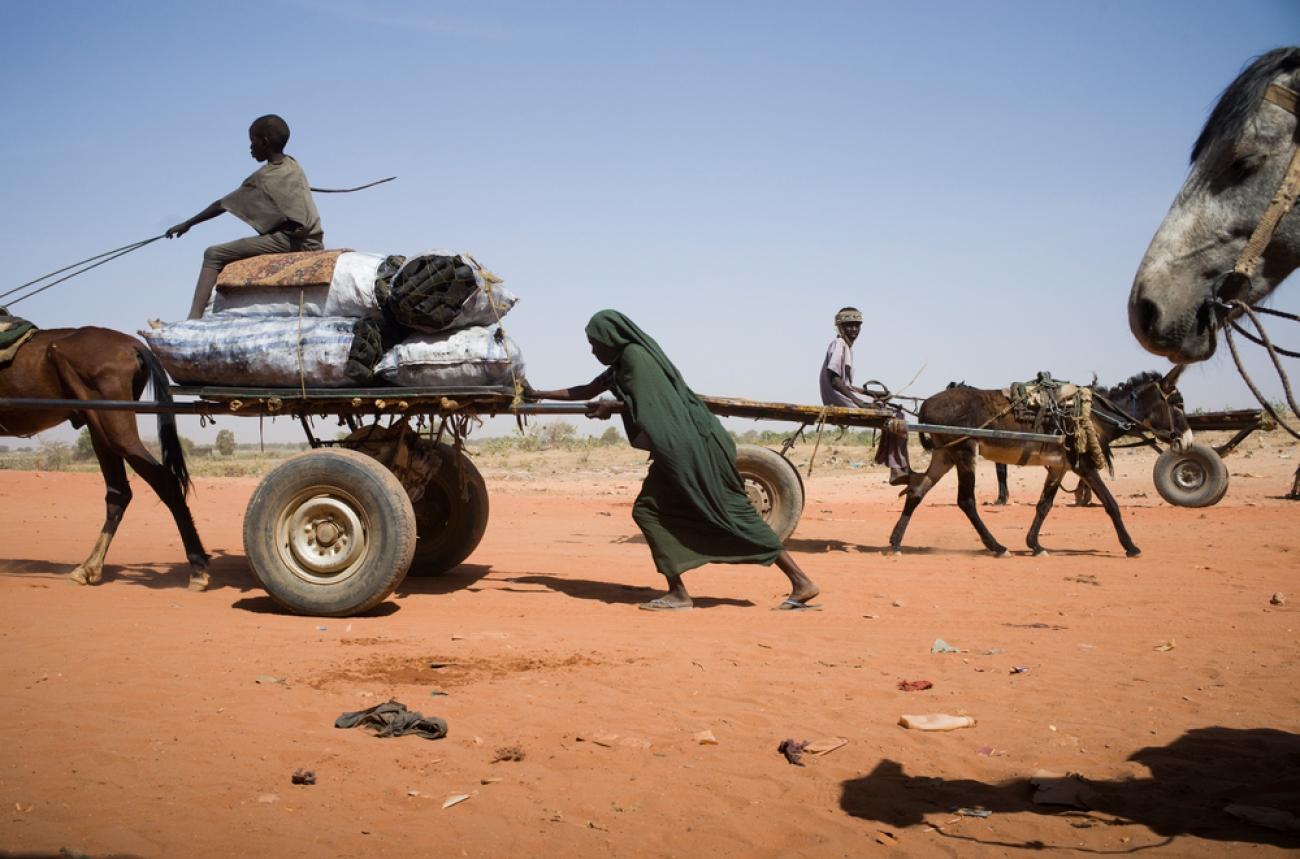
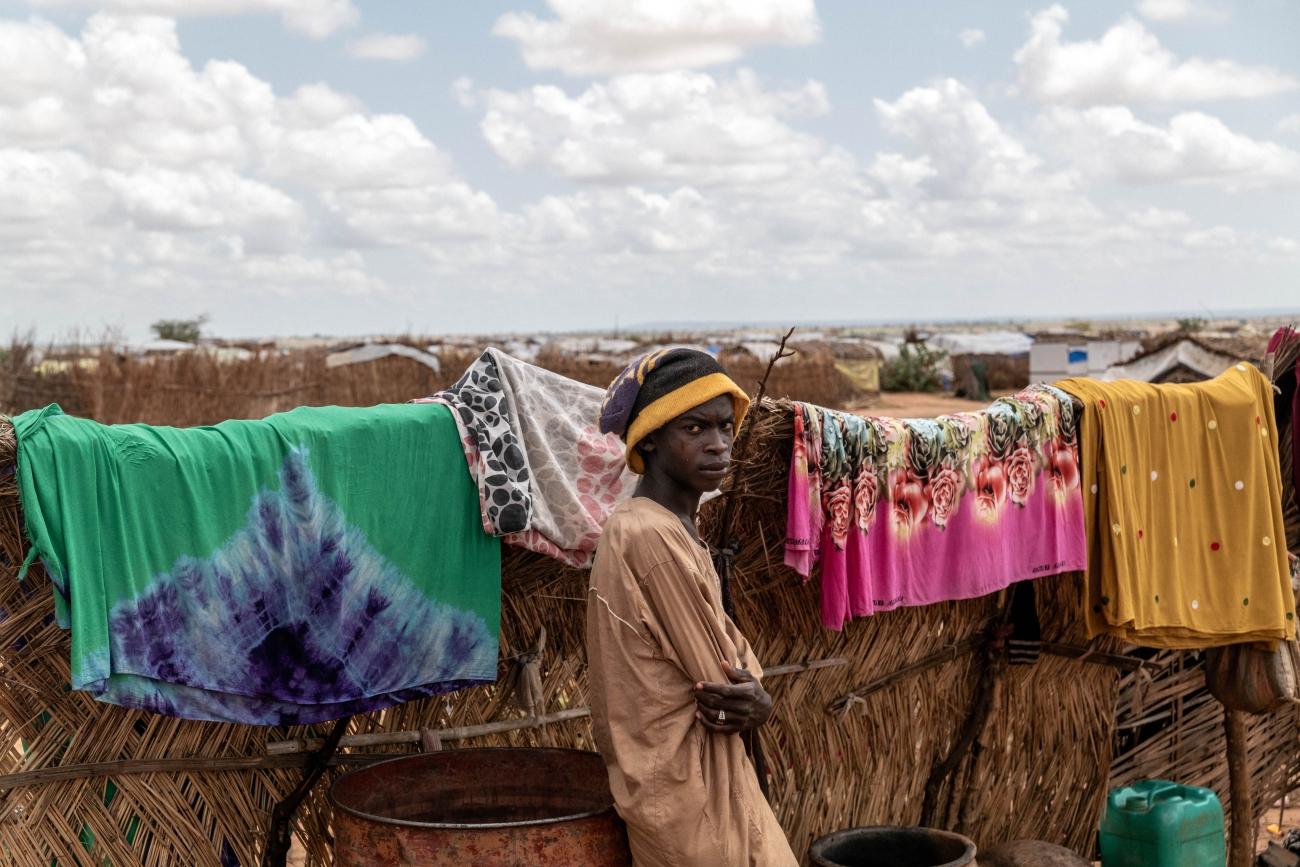
Three years into the conflict, the exact death toll remains impossible to determine. In the North Darfur capital of El Fasher alone, it is estimated at 150,000. According to the United Nations, 12 million Sudanese – one in four inhabitants – have been forced to flee their homes, either within the country or across its borders, predominantly into Chad.
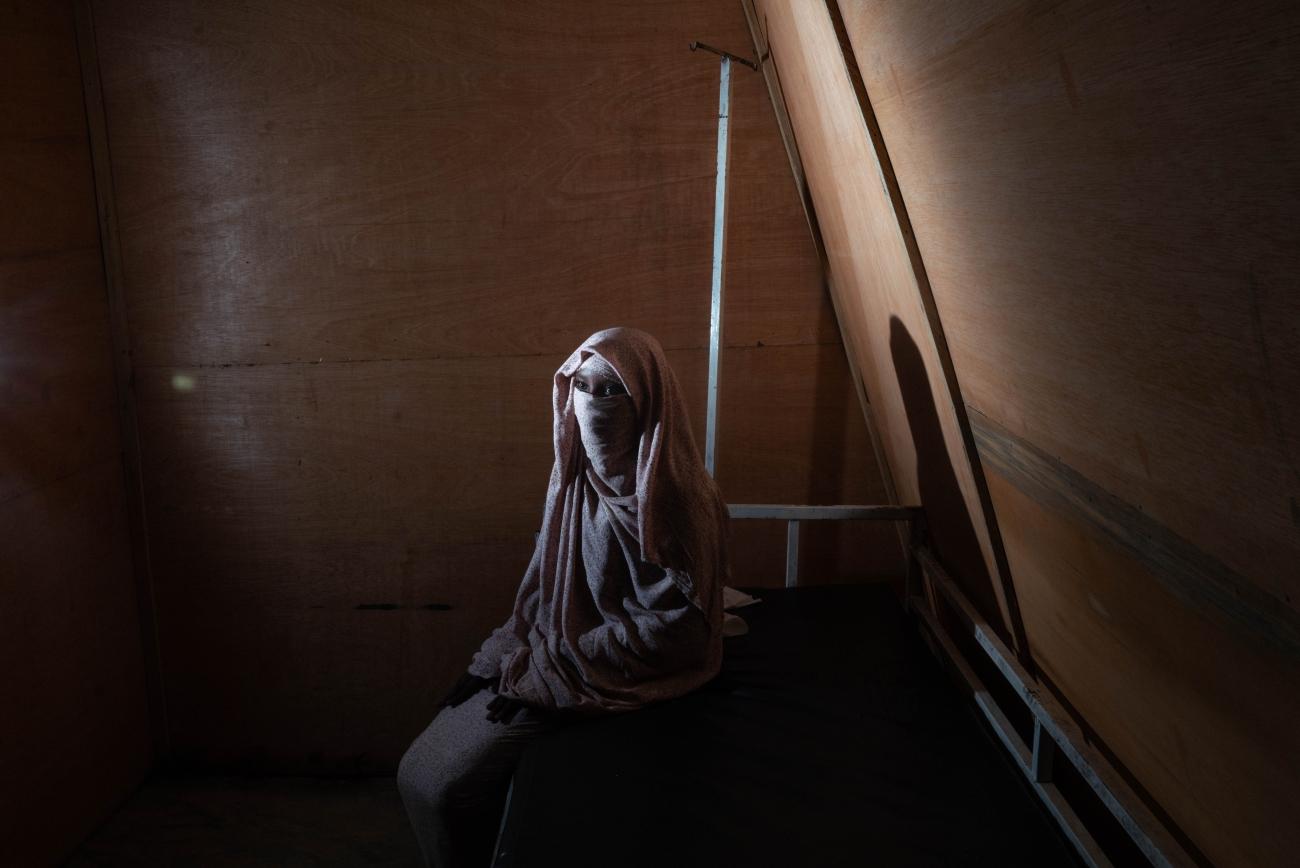
*What Remains of the Living* seeks, through a series of vignettes, to reveal the mechanisms behind this mass violence and to amplify the voices of survivors, to ensure their stories do not vanish.
Credits
Production: Médecins Sans Frontières, Bayeux Calvados-Normandie Award for War Correspondents
Artistic direction: Aurélie Baumel, Armelle Loiseau
Text: Armelle Loiseau
Photography: Diana Zeyneb Alhindawi, Pep Bonet/NOOR, Julie David de Lossy, Thibaut Fendler, Corentin Fohlen/Divergence, Alexis Huguet, Moises Saman/Magnum Photos, Jérôme Tubiana, Kadir Van Lohuizen/NOOR, Mohamed Zakaria, Agence France-Presse
Graphic design: Harold Kuhnel
Illustration: Shiroug Idris
Video editing: Loïc Adrien
Scale model: Juliette Marchand and Samuel Yal
With the support of Agence France-Presse, Human Rights Watch, Planet Images, the Wiener Holocaust Library Collections, and Waging Peace.
Background
Sudan, a vast East African country, was jointly administered by Egypt and the UK from 1899 until 1956, under what was known as the Anglo-Egyptian Condominium. Since the country’s independence in 1956, power has remained concentrated in the hands of an Arab or Arab-assimilated elite based in Khartoum, while communities on the country's periphery have been marginalised.
Darfur lies in the west, a region covering nearly 500,000 square kilometres, with a population of around 10 million. Its name means “Land of the Fur”, referring to the region’s majority ethnic group.
Several communities coexist there; almost all are Muslim and Arabic-speaking. Some define themselves as non-Arab – such as the Fur, Massalit, and Zaghawa – while other tribes identify as Arab. The dividing lines are fluid, as some non-Arab tribes have become ‘Arabised’, adopting the Arabic language and cultural identity.
From the 1980s onwards, tensions intensified between Arab groups (often nomadic) and non-Arab communities (more sedentary), driven by desertification and competition for land access.
In 2003, an insurgency erupted in Darfur against the central government of President Omar al-Bashir, who first came to power as the leader of a military coup in 1989. Rebel groups demanded a fairer share of power and greater development, accusing the government of stoking inter-communal tensions. To suppress the rebellion, the Sudanese army formed militias recruited from Arab communities. These fighters, who initially rode horses or camels, became known as the Janjaweed, or “devils on horseback”.
Non-Arab communities, accused of supporting the rebellion, became targets of massive attacks, with their villages systematically bombed and burned. Over the course of two years, this extremely violent war resulted in up to 400,000 deaths, according to the most frequently cited estimates, comprising those killed in combat and those who died from indirect consequences such as epidemics and starvation. Up to 3 million Darfuris were displaced, with 400,000 seeking refuge in neighboring Chad.
In 2005, a United Nations commission of inquiry concluded that, between February 2003 and January 2005, the Sudanese government and its allied Janjaweed militias had committed war crimes and crimes against humanity.
The conflict in Darfur continued at a lower intensity. In 2013, facing a resurgence of rebellions, the government formed a more official and better-armed version of the Janjaweed: the Rapid Support Forces (RSF). They were tasked specifically with fighting rebel movements that remained active in the Darfur region and the states of South Kordofan and Blue Nile.
In 2019, a massive popular movement led to the ousting of Omar al-Bashir after 30 years in power. A transitional government comprising civilians and military officials was established. In October 2020, a peace agreement was signed in Juba, South Sudan, with the main rebel groups from Darfur, South Kordofan, and Blue Nile.
In October 2021, a coup d’état brought this transitional period to an end. General Abdel-Fattah al-Burhan, head of the Sudanese Armed Forces (SAF, the regular army), then shared power with Mohamed Hamdan Daglo, known as “Hemedti”, commander of the RSF. Protesters from the 2019 movement took to the streets once again to express their opposition to the coup. This protest movement was met with a severe crackdown by the army. The alliance between the two men at the helm of power gradually fractured, culminating in open conflict in April 2023. Fighting spread to Khartoum and many regions of the country. In Darfur, it reopened old rifts and triggered a new wave of violence against non-Arab communities.
El Geneina, West Darfur
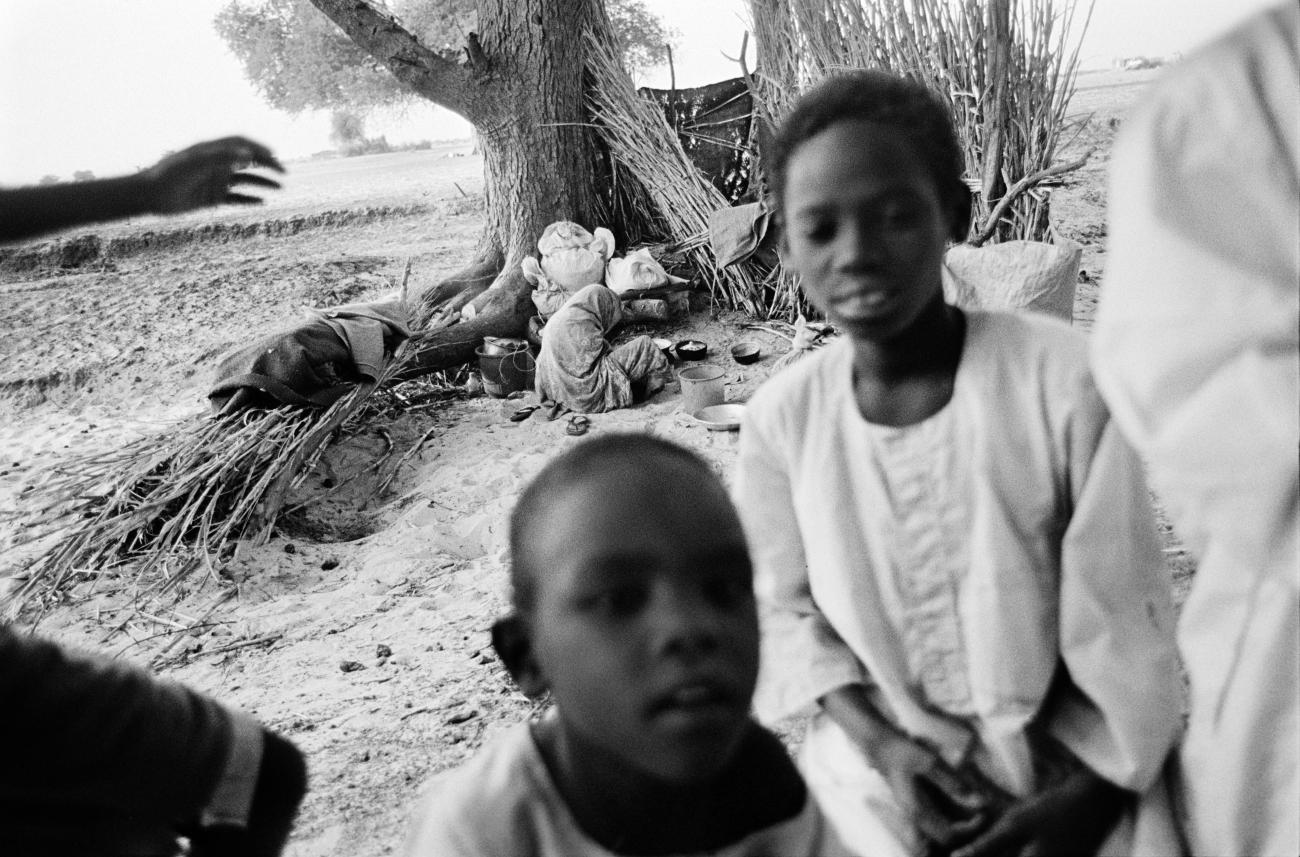
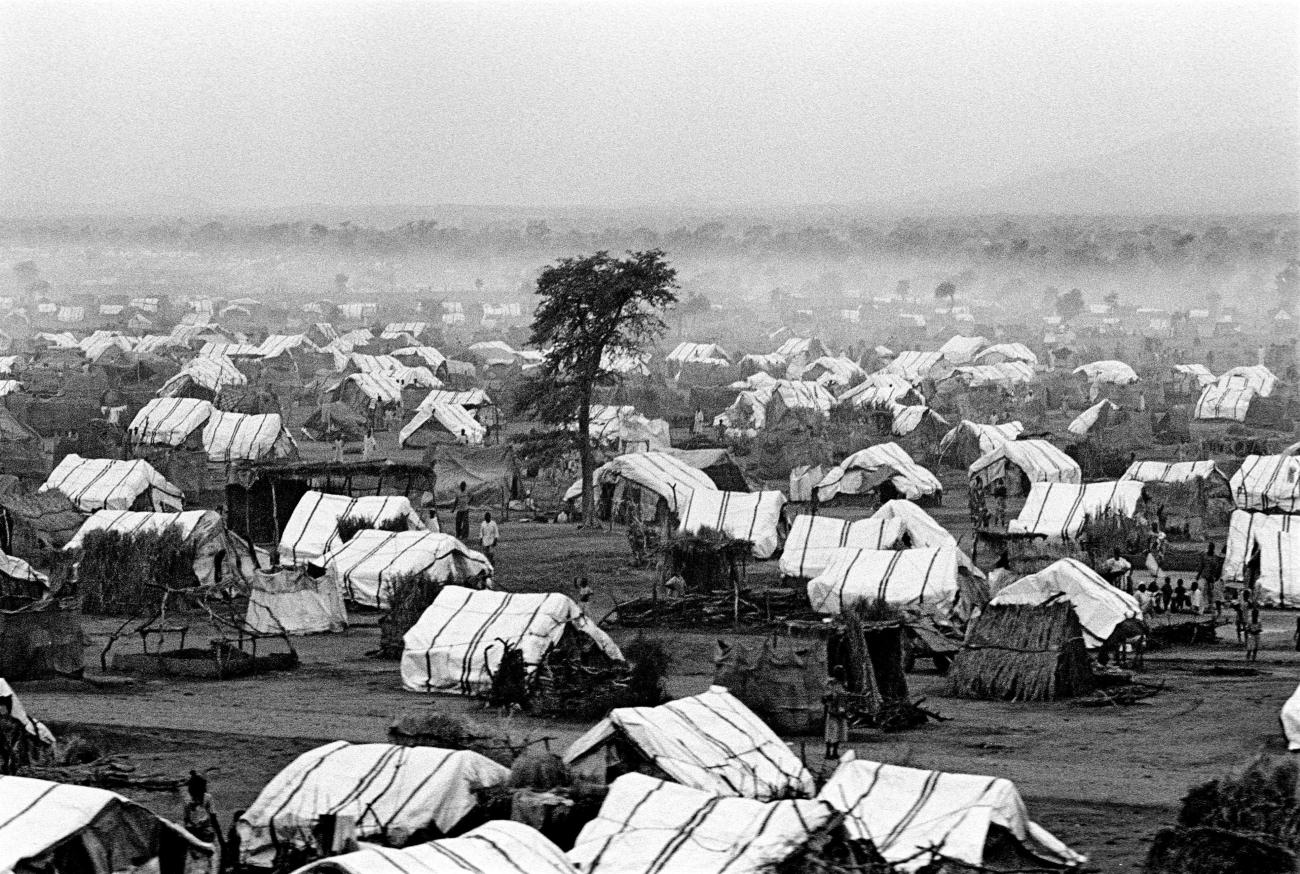
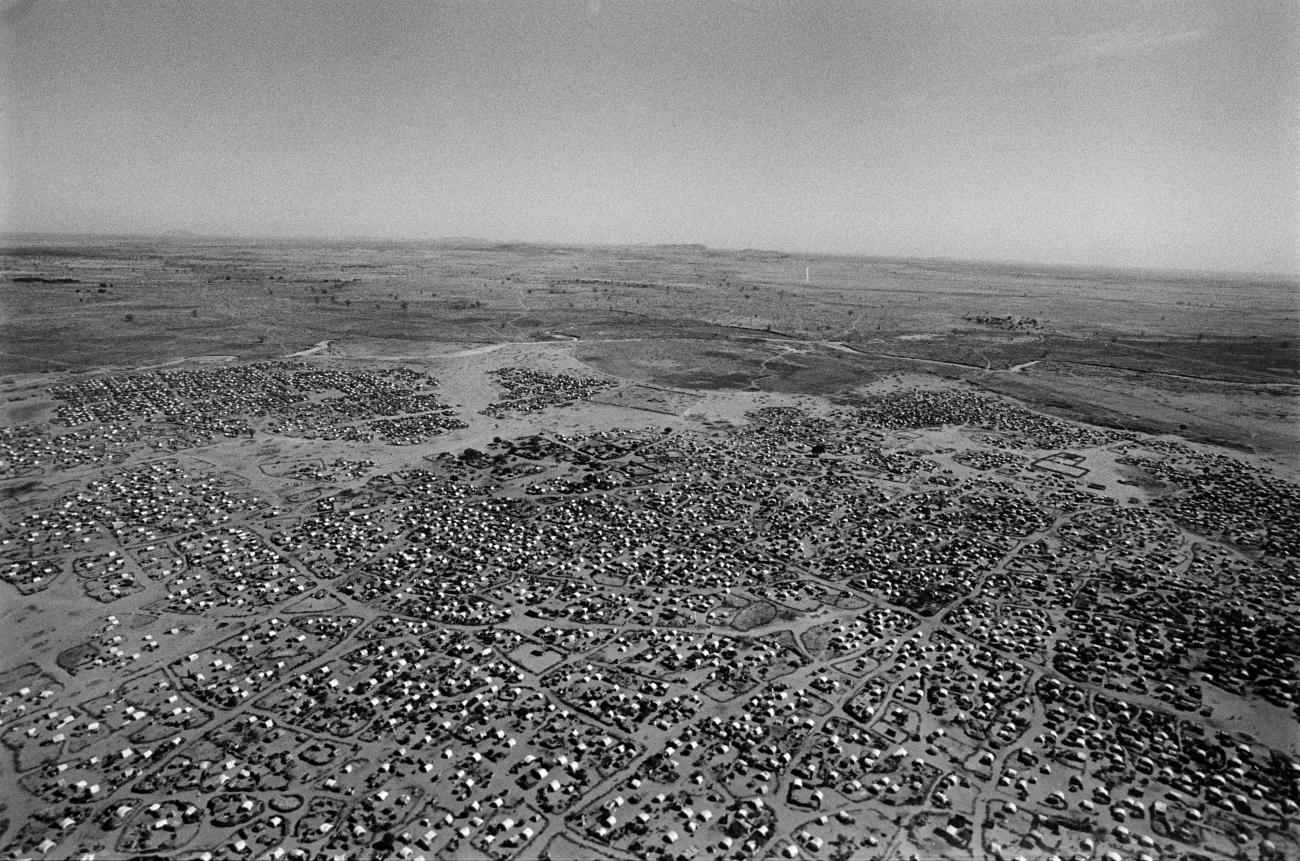
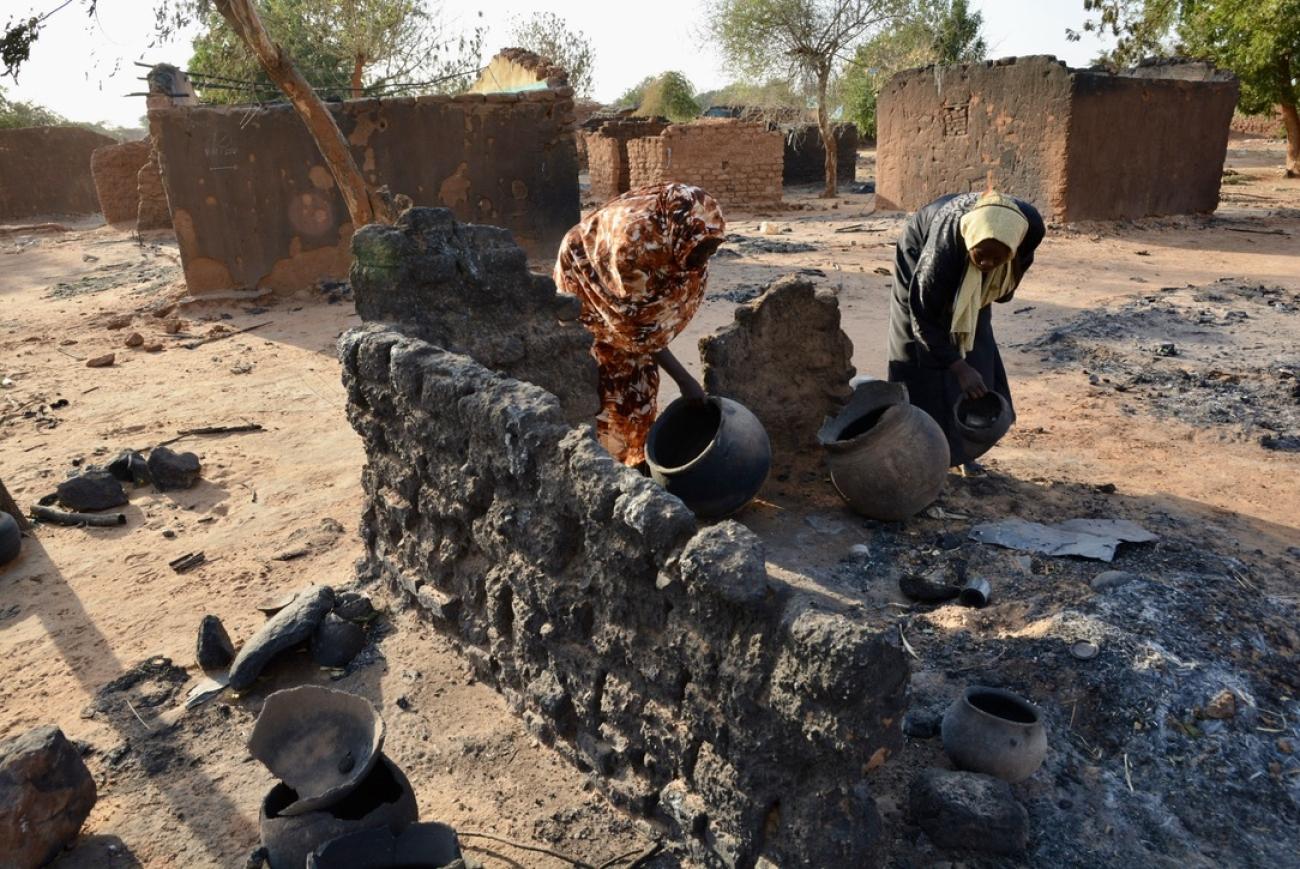
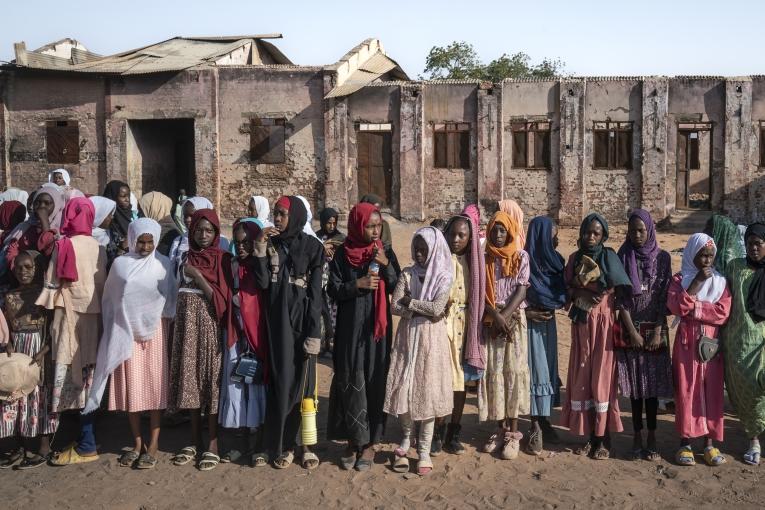
In El Geneina, the capital of West Darfur, violence against the Masalit has never truly ceased. The Masalit constitute the state’s principal community. Many of those who fled to Chad in the early 2000s haven’t returned. Others still live in displacement sites, such as in abandoned school buildings. Faced with a new wave of massacres perpetrated from 2020 onwards by the RSF and Arab militias, Masalit people have been forming (or re-forming) self-defence groups. By the spring of 2023, tensions had reached a breaking point. Just days after clashes erupted in Khartoum, the SAF and the RSF began fighting in and around the city. Events escalated rapidly. Villages and neighbourhoods were set ablaze, while sites housing displaced persons came under attack. Within a few weeks, the RSF seized control of the city and waged a campaign that UN and Human Rights Watch investigators would later characterise as ethnic cleansing targeting the Masalit community. According to a UN report, between 10,000 and 15,000 people were killed in El Geneina between April and November 2023. One such massacre took place on the evening of 14 June.
Drawing - quotes and events
On 14 June 2023, Khamis Abbakar, the Masalit governor of West Darfur, was abducted and killed by the RSF. Upon hearing this news, a crowd of residents converged on the governor’s home and the government offices.
At 6.00 pm, Masalit fighters – members of self-defence groups and the Sudan Alliance, a rebel group – announced they were withdrawing to Ardamata (the SAF headquarters, located a few kilometres from the centre). “If you want to leave, we are setting out at 8.00 pm You should follow us,” a soldier stated.
At 8.00 pm, the convoy departed from the Al Jamarek and Al Mansoura neighbourhoods.
“It was the whole of El Geneina. I have never seen something like this.” Mustafa, former civil servant
“Some people carried others on their backs, [some were] on vehicles, some on donkey carts. There was a truck carrying many older people. The rest were [uninjured] civilians, mostly women and children.” Jamal Abdallah Khamis, lawyer and human rights defender
At dawn, the attack begins in the Al Shati and Al Nassim neighborhoods, along the banks of Wadi Kaja. The RSF and their allies attack the under-armed Masalit fighters using assault rifles and machine guns. They also fire at civilians in the convoy, forcing them to plunge into the water.
“They opened random fire on us… many of them with Dushkas (heavy machine guns)… 40 people, civilians, were killed in front of me… women, men and children. And three donkeys, I saw them being killed.” Amer, community leader
“While I was escaping, I saw RSF vehicles running over many people. I saw them shoot seven people [...] I saw a woman get shot with her baby on her back and they both died.” Khaled
“My mom was pushing me in a wheelbarrow. Two RSF forces… grab[bed] the children from their parents, and as the parents started screaming, two other RSF forces shot the parents, killing them. Then they piled up the children and shot them. They threw their bodies into the river and their belongings in after them.” Malik, 17
“We could barely swim, and we lost all our belongings as we crossed. [They] were shooting at us as we were swimming. I heard them shouting ‘You are Nubas [an ethnic group from the Kordofan region, used as a derogatory term against non-Arab people] ! You should be killed!’ They opened fire on all of us, not just the men…” Yaseen, farmer
“They asked for your tribe. That’s the question they were asking everybody… if you said you were Masalit, you were tortured more… They would say: ‘Is this your land? Is this your land?’…” Ramzi
|
Excerpts from the report *The Masalit Will Not Come Home*, published by Human Rights Watch in May 2024. A team of researchers analysed satellite images and more than 110 videos and photos posted on social media, and interviewed 221 people, including 174 residents of El Geneina. The testimonies gathered describe a crowd of "5,000 to several tens of thousands" of people, stretching for several kilometres. According to those interviewed, 547 people were killed between 14 and 15 June 2023. In Adré, Chad, 30 kilometres west of El Geneina, MSF teams treated 858 wounded people between 15 and 17 June. Dr. Papi Maloba, an MSF surgeon, recounts the events of June 15: “We didn't know where to start. The injuries were severe: to the abdomen, chest, and lower limbs, and especially to the buttocks and back. Our job was to triage the most seriously wounded, examine them, and prioritize them for surgery. And in the blink of an eye – in less than two hours – the hospital turned into a makeshift camp. We ran out of space for the patients who kept pouring in. We knew that if the road to El Geneina opened – if negotiations to establish a corridor and allow patients from El Geneina to pass through succeeded – people would arrive in Adré. We had prepared for that. But we hadn't expected such a massive influx of wounded people all at once.” |
Human rights watch video introduction
This video is an adaptation of the interactive timeline created by Human Rights Watch to accompany the May 2024 release of their report, *The Massalit Will Not Come Home*. It incorporates excerpts from a video interview with human rights defender Jamal Abdullah Khamis, conducted by Human Rights Watch and illustrated by Shiroug Idriss.
Stencil
They told us: you have no right to exist here.
El Fasher, North Darfur
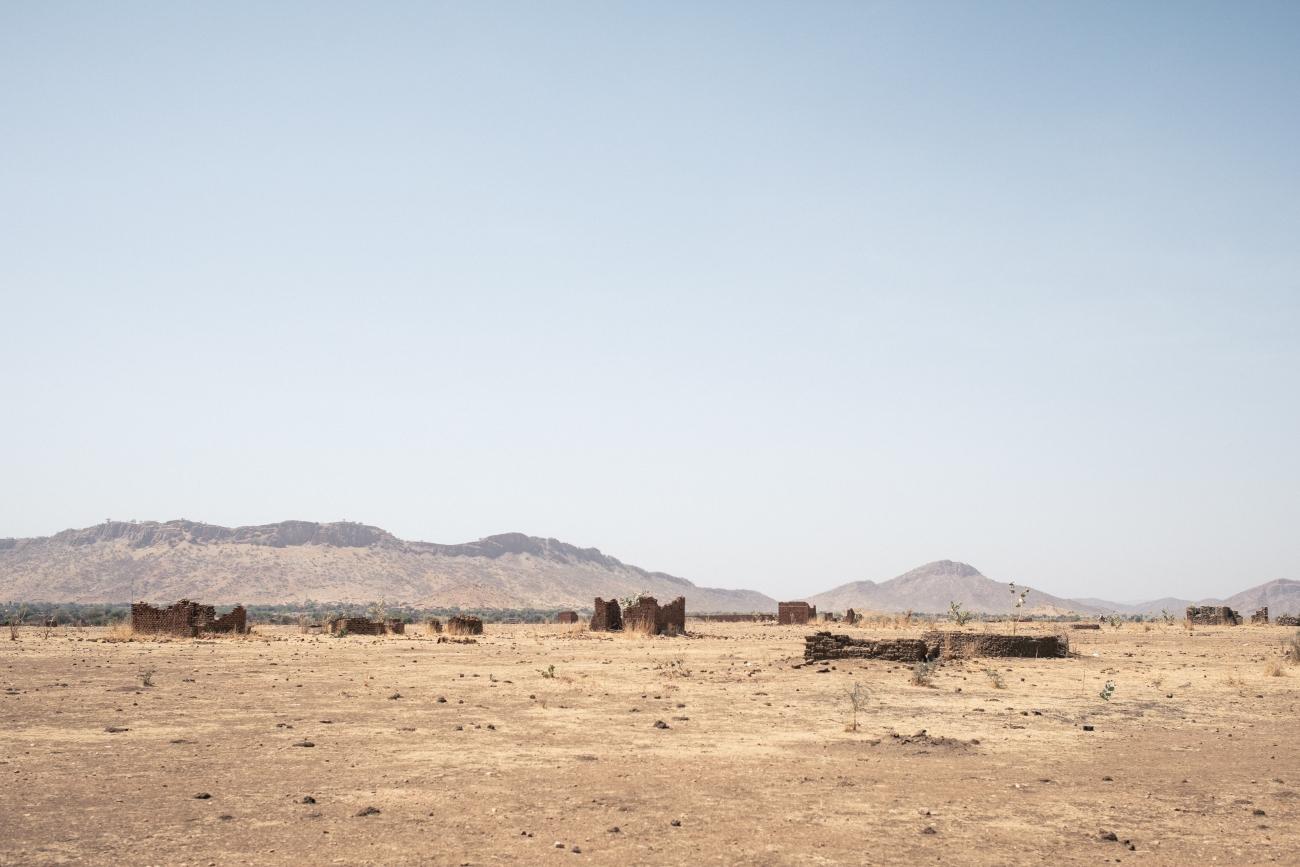
While the epicentre of the violence during the early months of the war was in West Darfur, North Darfur was not spared. The RSF were gaining ground, yet El Fasher, the state capital, held out. By April 2024, it was the last of Darfur’s five state capitals still under government control. It was home to 2.5 million people, including 800,000 displaced persons. Located 15 kilometres to the south is Zamzam camp, established in 2004, Sudan’s largest camp for displaced people, housing hundreds of thousands more.
El Fasher became a prime target for the RSF as they lost control of Khartoum. Paramilitary forces and their allies encircled the city, initiating a siege that would last 18 months. Civilians found themselves trapped between shelling by the RSF and the SAF.
An MSF team working at the city’s South Hospital witnessed the escalating violence. Between 10 May and 8 June 2024, 1,347 wounded people were treated there; 214 died of their injuries. In June alone, 21 per cent of the casualties were women and 16 per cent were children.
The RSF set up checkpoints on roads leading into the city. They systematically targeted non-Arab communities, particularly the Zaghawa. Witnesses reported to MSF that RSF fighters asked civilians about their tribal affiliation: “Those who answered Zaghawa were killed on the spot.” The term “falangay” – meaning “slave” of the regular army – was systematically used to refer to the Zaghawa. Residents overheard RSF members discussing plans over the radio to “cleanse El Fasher” of its non-Arab population.
Less than a year after the ethnic cleansing of the Masalit in El Geneina, observers warned that if El Fasher fell to the RSF, the Zaghawa would face the same fate.
On 13 June 2024, the UN Security Council adopted Resolution 2736, demanding an end to the siege. It was never implemented.
The few escape routes from El Fasher closed one by one. Early in the siege, the RSF allowed the 60-kilometre road to Tawila to remain open for just a few hours each Friday. This road – dubbed “tariq al-mawt” (“the road of death”) – was monitored by the Sudan Liberation Army (SLA), a neutral armed group. It enabled people to leave the city and allowed for the delivery of essential supplies. However, this narrow window of opportunity soon closed; in November, the RSF seized control of the road.
Supplies stopped reaching the city, but the strategy of strangulation did not end there. Markets were repeatedly struck. Famine was officially confirmed in August 2024 at the Zamzam displacement camp by the Integrated Food Security Phase Classification (IPC) initiative. By December 2024, the declaration had been extended to five areas across Sudan, including El Fasher’s other two displacement camps. A rapid assessment conducted in March 2025 at displacement sites in El Fasher revealed that 38 per cent of children under the age of five were suffering from acute malnutrition – more than double the 15 per cent emergency threshold. Residents were eating animal feed to survive. The water tanks and pumps in El Fasher and Zamzam are either destroyed or out of service.
On 11 April 2025, the RSF and their allies launched a massive ground offensive against the Zamzam camp, the population of which was then estimated at 500,000 people. Three days of extremely violent attacks left more than a thousand people dead, according to a report by the UN High Commissioner for Human Rights, while thousands of others were wounded, raped, tortured, or abducted. Survivors of the massacre fled to El Fasher and Tawila. Zamzam was completely emptied within a few weeks.
“They [the RSF] said: “[…] if we find trucks carrying food to El Fasher, we’ll attack them.” Trader
“When the SAF came to our area, they accused people of being in the RSF. The SAF arrested 3 civilians, then released them. The SAF entered our house, scattered all our belongings and looted some. […] I used to trust the SAF but they did a lot of bad things.” Woman, 50
“They [the RSF] are targeting men and boys. They kill them because they think they are military and enemies.” Woman, 25
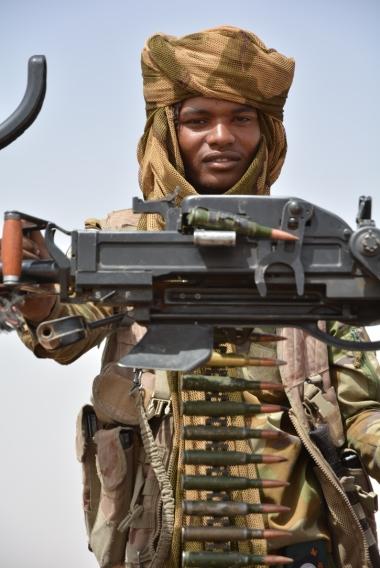
“The RSF target all black tribes, but more the Zaghawa than others. Because they’re saying the Torabora [rebels] are all Zaghawa.” Woman, 45
“If El Fasher falls, the RSF will come, rape, abduct, kill and humiliate us, and then we [Zaghawa] will have no more land in this country. It is about being part of Darfur or not.” Man
“Only God knows what will happen in El Fasher. But if the RSF take El Fasher, they will carry out ethnic cleansing and genocide, like what happened in El Geneina.” Man, 41
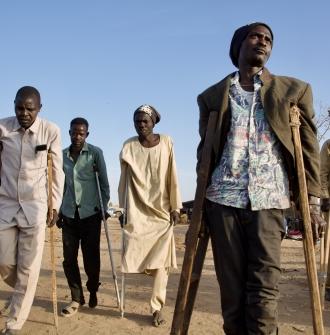
“Every single person they were seeing, they shot at them, no matter if it was a child, a woman or an elderly person.” Woman, 40
“Zamzam became like hell, there was shelling and shooting from all sides (...). Many were just lying on the road, some injured, even some children, but there was no way to rescue them, there was nowhere to take them. There was no medicine for them.” Man, 38
“Relief International staff were hiding in a foxhole. The RSF shouted, “Come out, falangayat [slaves]!” They put them under a zinc shelter, lined them up, and shot them all. I saw it with my own eyes.” Woman, 25
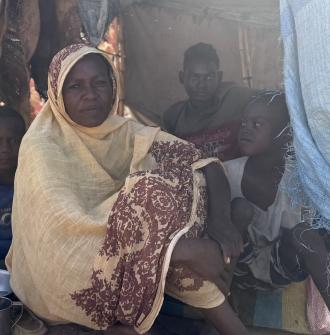
“In February, the RSF attacked the market, and because of this, prices became very high. […] People started to come to Tawila on camels, donkeys and donkey carts to buy food and bring it to Zamzam. If the RSF caught them, they would kill them. Five or six people were killed on the road as they were trying to bring food.” Man, 34
“If anyone comes to them, they shoot them. If you come walking or by car, they will shoot you. The only option is not to use the main road.” Woman, 42
“For us it was easier, maybe because we moved during the night. But for the others, mainly those who moved during the day, the RSF killed many young men; they just slaughtered them. The women, they took everything from them, even their clothes.”
Man, 30
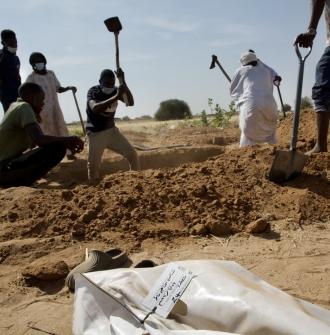
“Women were victims of a lot of violence. As a psychologist I used to go to gathering sites, to give support to the victims. In [a] centre I met three sisters who were raped by the RSF […], and I tried to help them to forget about it. It was very difficult for them to talk about it. “ Woman, 33
“In Zamzam, I heard the RSF chatting, saying ‘Yesterday we raped women’, and one mentioned he had raped young girls.” Man
“One of them took my 15-month-old son and the other took me under a rakuba [shelter]. He did what he wanted to me and threatened me with a knife, saying that if I tell this to anyone, he will kill me.” Woman, 25
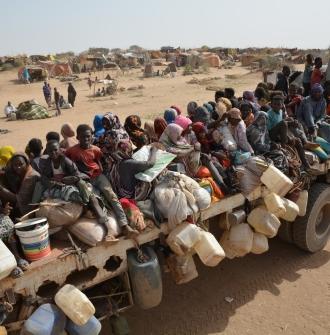
Stencil
They announced: “We are going to empty El Fasher, and our target is the Zaghawa.”
Dr Jiddu's testimony
Dr Jiddu is a surgeon. He is part of a group of eight volunteers working at the former military hospital in Tawila, 60 kilometres from El Fasher.
“Because hospitals in El Fasher were repeatedly targeted, they had to discharge the patients. Some were put in abandoned houses which were turned into hospitals, but with little equipment. Then some were brought here by relatives or neighbours. First, they came on Fridays, when our fighters were deploying to protect the road between El Fasher and Tawila. Then RSF blocked the road and it became more dangerous.
Since El Fasher’s fall, not many survivors reached Tawila, but it’s like all of them were injured. Some were injured in El Fasher and others on the road. Many do not have relatives here and cannot fend for themselves. Since El Fasher’s fall, our hospital has also received 50 cases of rape.
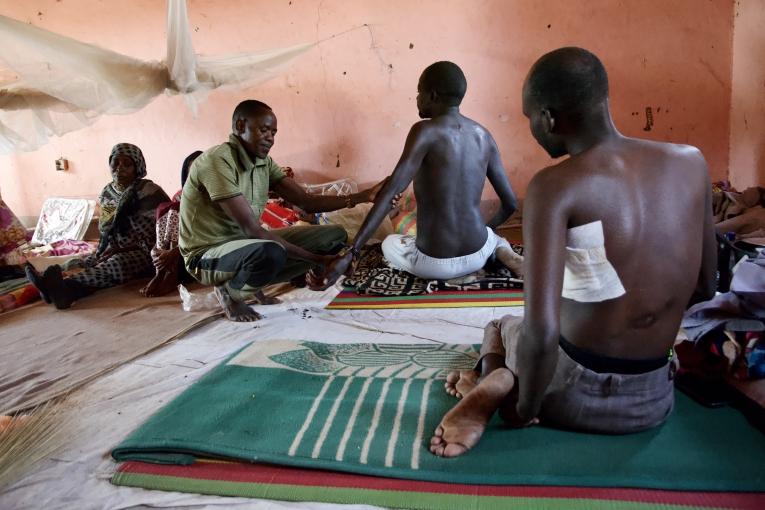
Now we have five injured patients staying here, sleeping on mats or carpets on the floor. We are from the main local community, the Fur, and we speak the Fur language and not only Arabic. So the people trust us.
We’ve always been here to treat anyone, even at the worst times, during Al-Bashir, when all the international organisations either left or were only doing what the regime was telling them to do. At that time, we were left alone, civilians and rebel fighters together, hiding in the mountains, surrounded by the Janjaweed of Hemetti, sometimes sheltering in caves because of plane bombings. We’re used to help each other to survive.”
Testimony collected on 22 January 2026.
The destruction of the healthcare system
- April 2024: A shell fired by the Rapid Support Forces (RSF) hits a private clinic in the Abu Shok camp; 17 civilians are killed. “The majority were children; their bodies were scattered, and we had to use their clothes to try to identify them.” (Testimony from a 39-year-old man collected by MSF)
- 10 and 11 May 2024: Fighting and shelling around the Babiker Nahar paediatric hospital. Patients are evacuated, except for 13 children hospitalised in the intensive care and neonatal units. On 11 May, shelling by the Sudanese Armed Forces causes the roof of the intensive care unit to collapse, killing two children and an accompanying person.
- 19 May 2024: The maternity ward of the Saudi Hospital is hit by shelling.
- 25 May to 8 June 2024: The South hospital is shelled three times, causing damage to the neonatal ward, the delivery room, and an ambulance. Two people are killed and 12 injured. On 8 June, the RSF attack the hospital, loot it, and steal an MSF ambulance. The hospital – the last facility still capable of handling mass influxes of wounded patients – ceases operations permanently.
- 8 June 2024: A volunteer-run emergency care clinic in the Abu Shok camp is hit by mortar fire and two other explosive devices. Four to five people are injured. A few weeks later, the camp’s malnutrition treatment centre is shelled by the RSF.
- 21 June 2024: An RSF shell strikes the Saudi Hospital pharmacy overnight, killing the pharmacist on duty.
- June 2024: Closure of the university hospital, which had been targeted multiple times since the start of the conflict in El Fasher.
- 29 July 2024: Two shells strike the Saudi hospital, leaving three people dead and 25 injured.
- 3 August 2024: The Tumbasi medical centre is shelled; 23 people are killed and 60 injured. The centre sustains heavy damage and is forced to close; all patients are evacuated.
- 11 August 2024: The surgical unit of the Saudi hospital is hit. One person is killed and five others are injured. MSF is forced to suspend all support for the hospital – the last public facility still capable of performing surgeries.
- 25 September 2024: Two trucks carrying medicines and nutrition supplements for MSF finally arrive in Tawila, 60 kilometres from El Fasher, after being stranded for three months.
- 10–17 October 2024: Bombardment of the Saudi hospital.
- 28 November –18 December 2024: Four attacks on the Saudi hospital. A drone strike on 13 December killed 9 people and injured 20. On 16 December, another drone strike by the RSF killed 8 people. On 18 December, a bombardment killed 18 people.
- 27 December 2024, and 10 January 2025: MSF ambulances came under fire while transporting patients to the Saudi hospital. On 10 January, a female passenger was killed.
- 25 January 2025: The RSF shelled the emergency department and blood bank of the Saudi hospital, killing 30 people. That same day, the hospital received 234 people, 34 of whom were dead on arrival.
- February 2025: MSF ceased operations in Zamzam camp.
- March 2025: More than 200 health facilities in El Fasher are no longer functional.
- 11 April 2025: Nine staff members from Relief International – the last international humanitarian organisation remaining in Zamzam camp – are executed at a camp clinic during a large-scale ground offensive launched by the RSF against the camp. Two other staff members die from their injuries.
- 26 October 2025: The RSF capture El Fasher. In the maternity ward of the Saudi hospital, one medical staff member is killed and three others are wounded.
- 28 October 2025: Six staff members from the Saudi hospital maternity ward are abducted. More than 460 patients and their accompanying persons are killed.
Sources: Médecins Sans Frontières, Human Rights Watch, Office of the United Nations High Commissioner for Human Rights, Sudanese Doctors Network, United Nations Office for the Coordination of Humanitarian Affairs, Relief International, World Health Organization.
Faced with the juggernaut of war, the Sudanese people have never ceased organising, helping one another, and resisting.
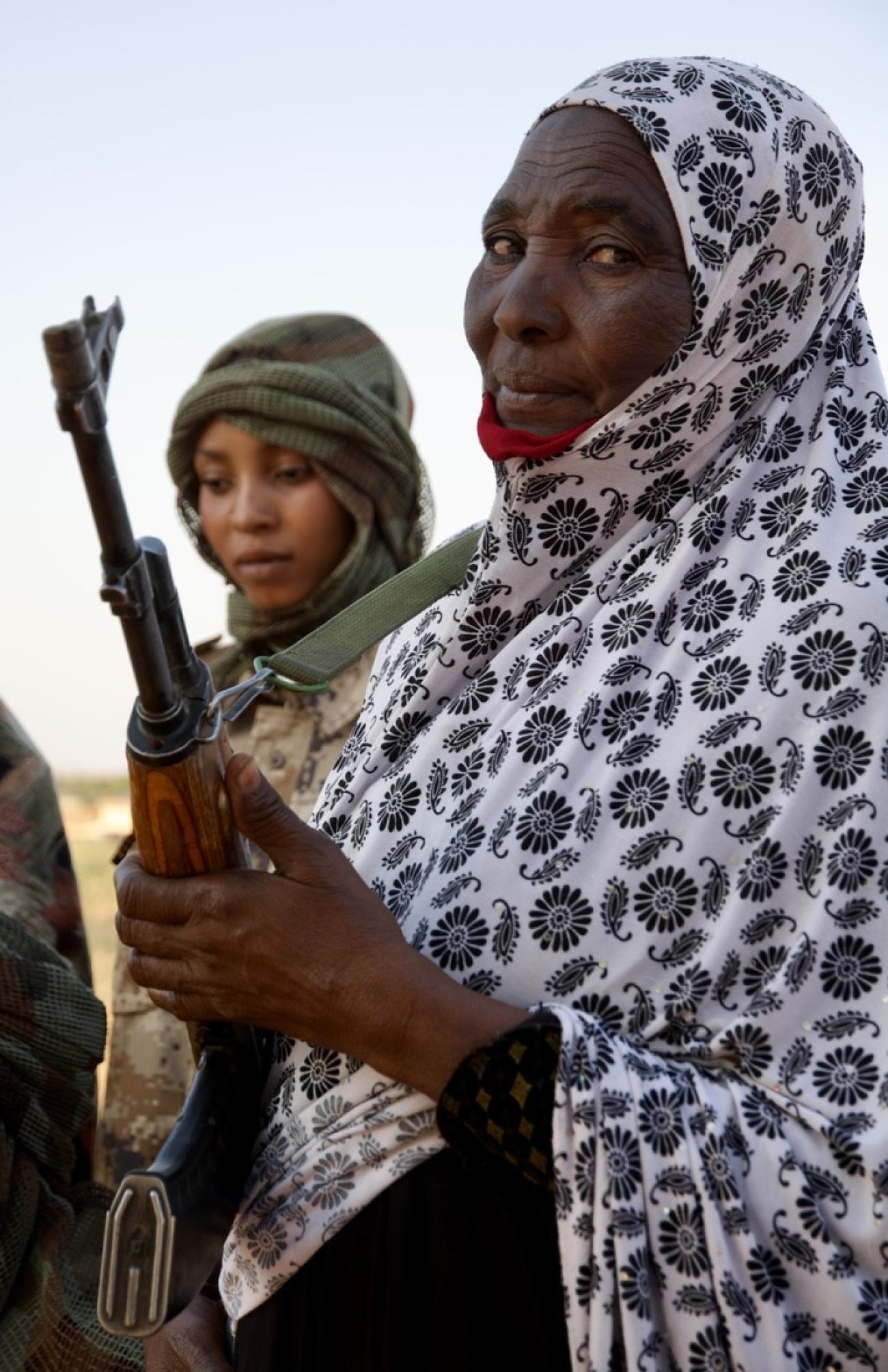
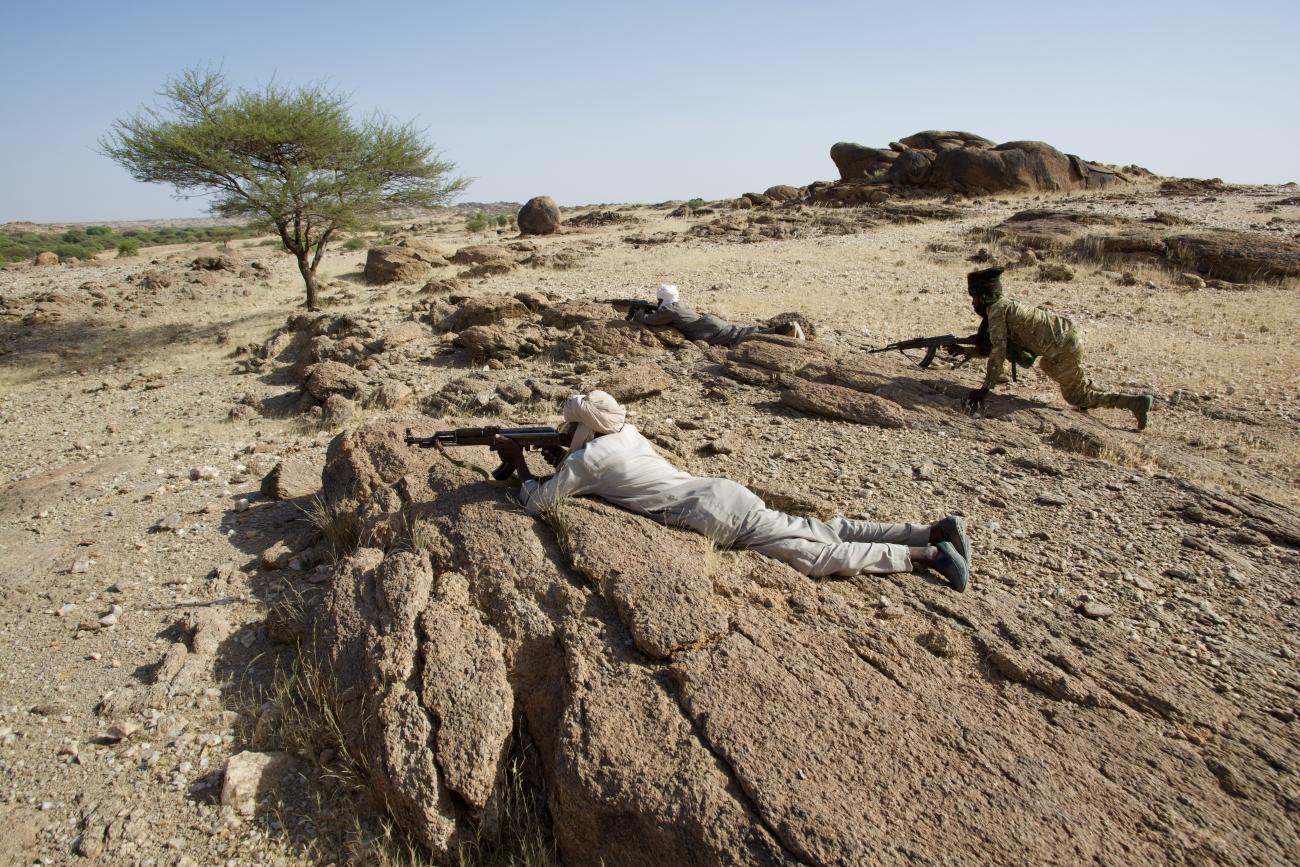
Witnessing the relentless violence unleashed against the Masalit in West Darfur in 2023, the Zaghawa of North Darfur took up arms and formed self-defence groups to avoid suffering the same fate. Many women are among these fighters. Having already been present in Darfuri armed groups in 2003, female fighters took up – or took up again – arms; examples include Hanadi, killed during the Rapid Support Forces (RSF) attack on Zamzam displacement camp, and Sara ‘Kalash’ Ismail. Active in the Sudan Liberation Movement since 2004, the Sara is participating in the defence of El Fasher. Fighting alongside her was Asia Khalifa, the official spokesperson for the city's popular resistance.
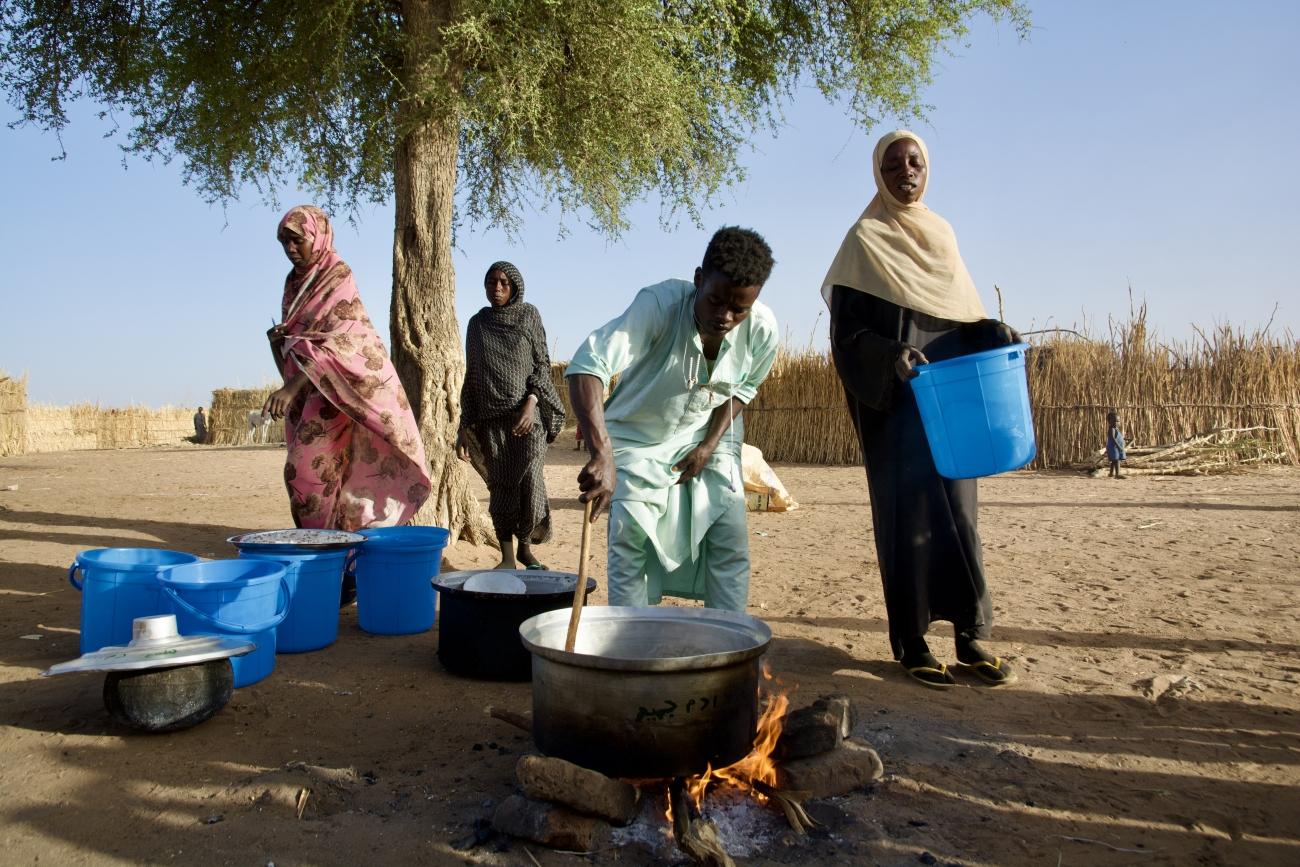
Sudanese resistance is not limited to armed struggle. Feeding, treating, and sheltering displaced persons... ‘Emergency response rooms’ emerged in the wake of the resistance committees that spearheaded the 2019 protests leading to the fall of Omar Al-Bashir. In a country shaped by a culture of collective action (nafir), resistance committees were originally formed to organise protests across various neighbourhoods and villages. In 2023, many of their members joined the emergency response rooms, which distribute food to millions of displaced people through communal kitchens, or takiya. They also manage medical centres and water distribution, funded locally or by the diaspora.
The siege of El Fasher has all but destroyed these initiatives, though some displaced people in Tawila have attempted to re-establish them within the camps. Emergency departments were nominated for the Nobel Peace Prize twice, in 2024 and 2025.
Siege of El Fasher
The siege of El Fasher lasted more than 550 days: eighteen months of bombardment, massacres along the roads, and the gradual encirclement of a city cut off from the outside world.
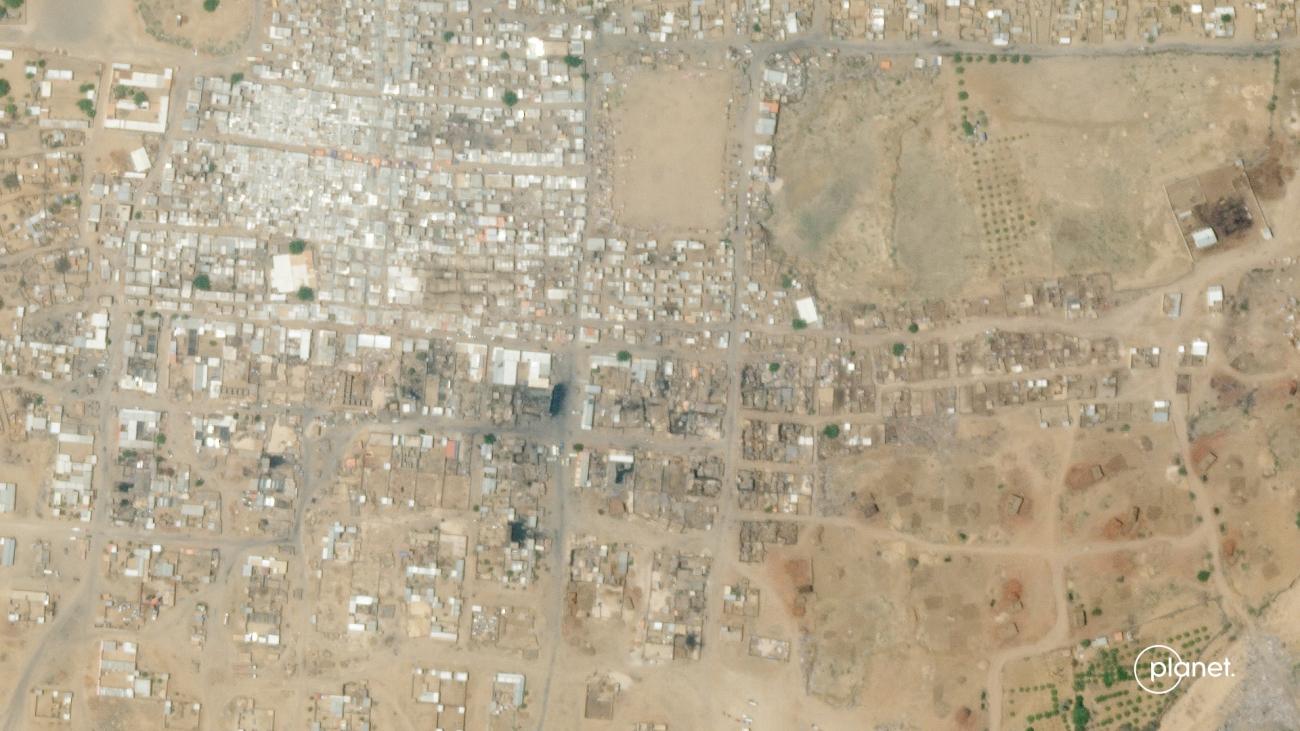
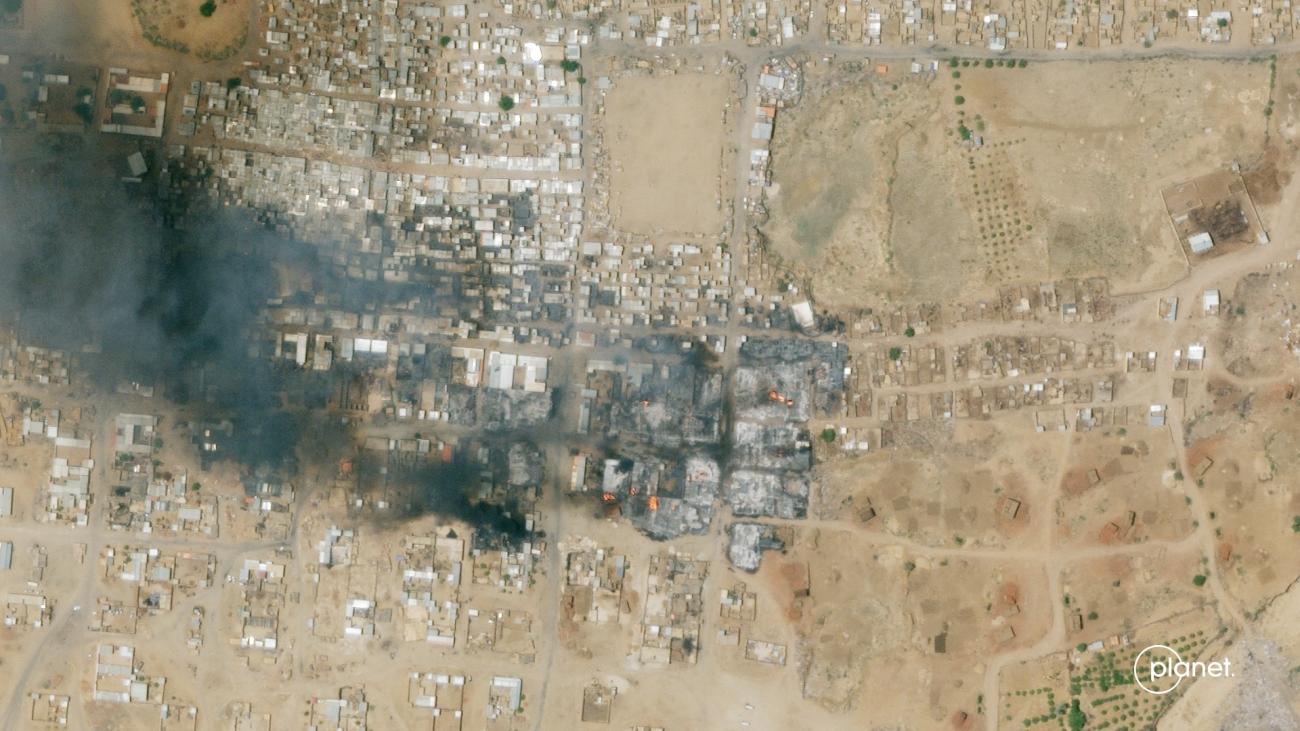
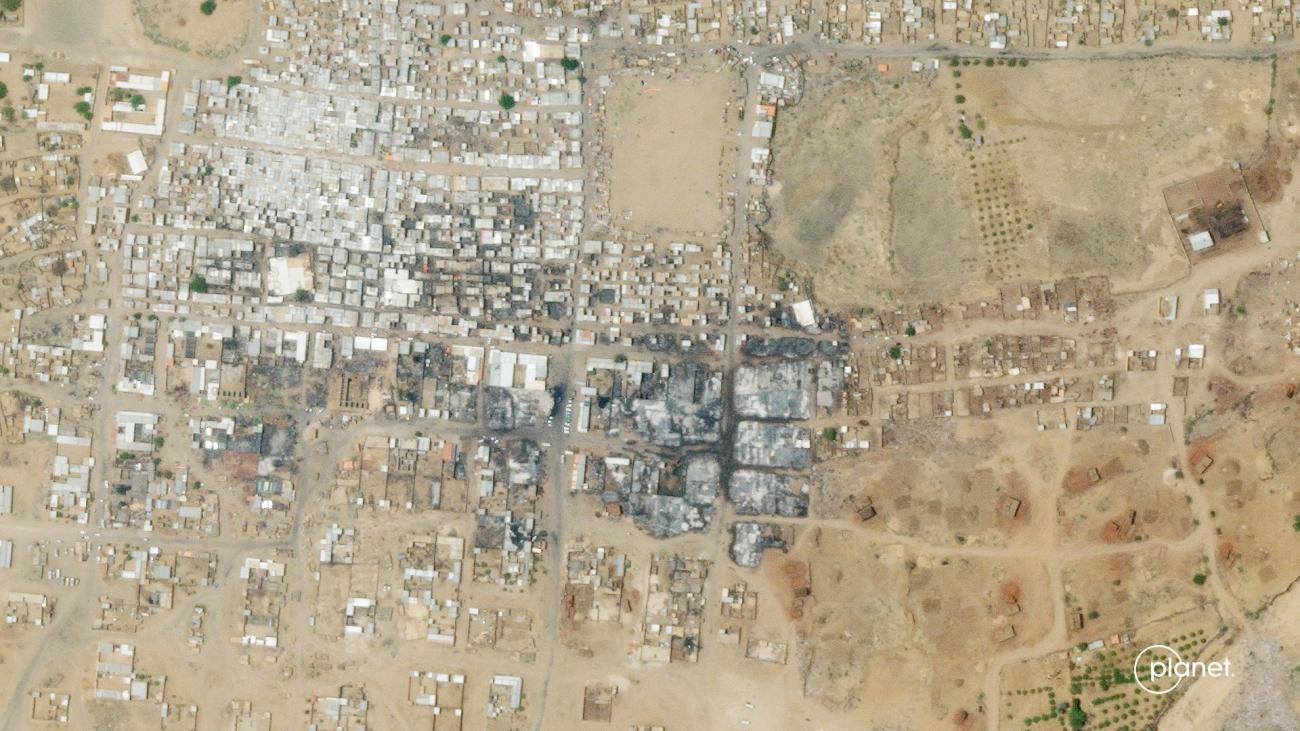
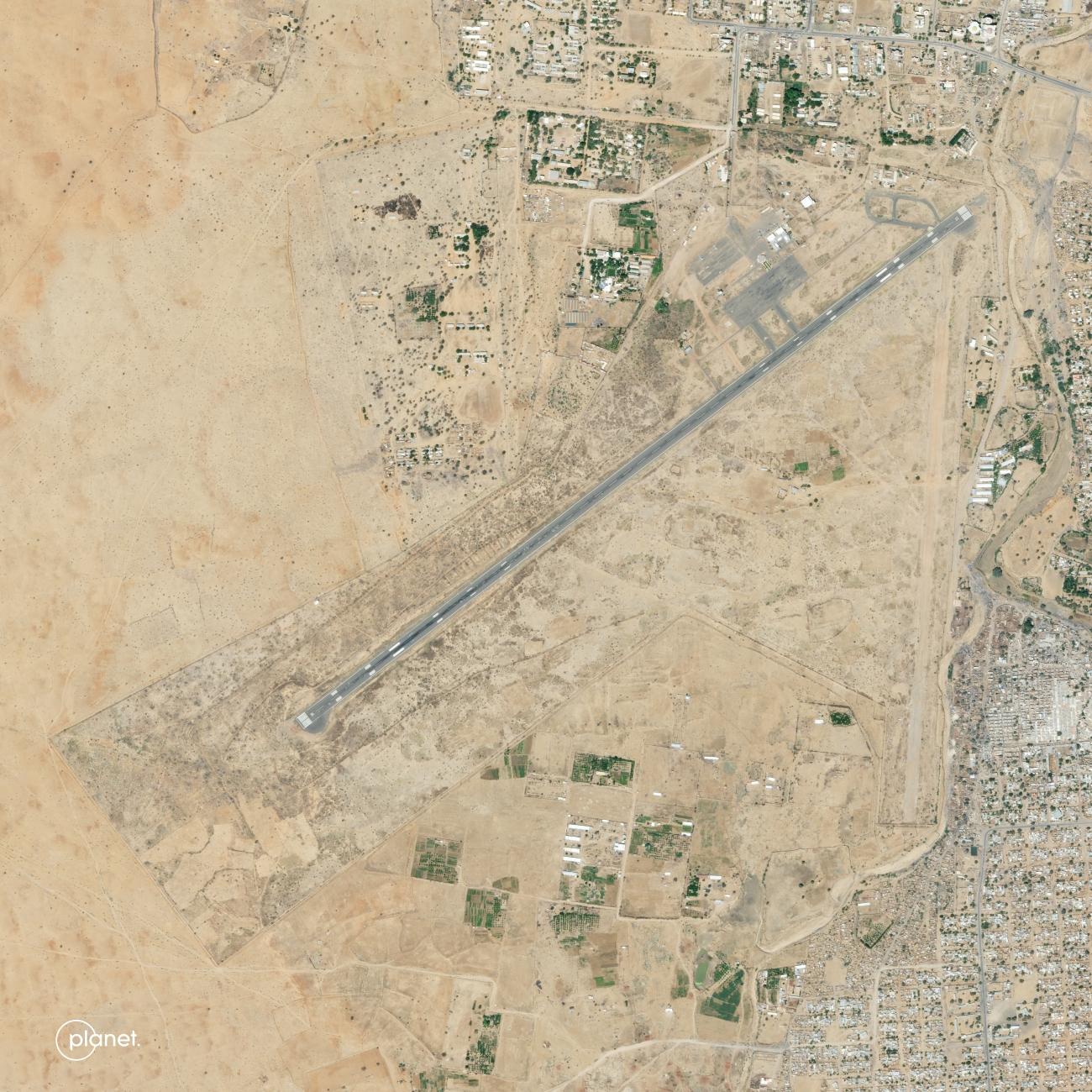
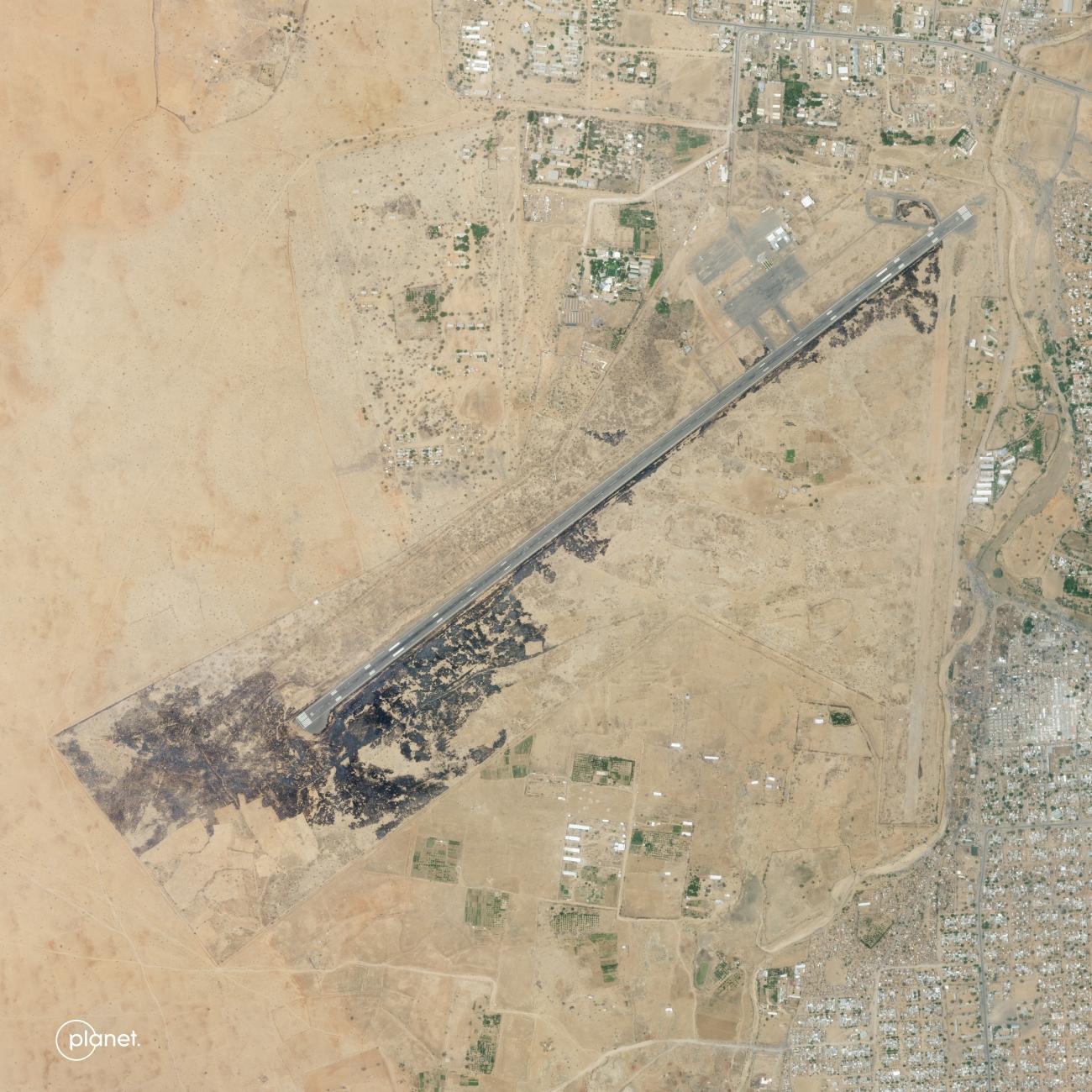
Throughout those eighteen months, the Humanitarian Research Lab at Yale University published reports analysing satellite imagery captured before and after attacks by the RSF. These images methodically document shelling, fires, and mass killings, as well as the gradual construction of a sand wall around the city, beginning in May 2025, that rapidly rendered both escape and the delivery of supplies impossible.
As in El Geneina, satellite imagery has become essential for documenting the mass atrocities committed in Darfur, given the scarcity of photographs or videos emerging from the region. It is largely thanks to these analyses that we know the city’s capture in October 2025 was followed by days of mass executions. In February 2026, the United Nations fact-finding mission in Sudan reported that the RSF had waged "a coordinated campaign of destruction against non-Arab communities in and around El Fasher, the hallmarks of which point to genocide." The report cites war crimes, crimes against humanity, and that "at least three underlying acts of genocide were committed."
Scale model
This model depicts the city of El Fasher. It features locations that were significant during the siege and the capture of the city.
The city is modelled at a 1:25 scale.
The locations have been depicted as accurately as possible, although a lack of visual references sometimes required us to approximate certain elements. Furthermore, the locations are not to scale, in order to highlight their importance.
1 - Abou Shok Market
2 - Airport
3 - Al Salam School displacement site
4 - Saudi Hospital
5 - University Hospital
6 - Golo water reservoir
7 - Sand wall (3 metres high, 31 kilometres long)
8 - Amna Binti Wahab School displacement site
9 - Former UNAMID complex
10 - Al Safia Mosque
11 - El Fasher University
12 - Sudanese Armed Forces (SAF) Headquarters
13 - Shala Prison
14 - Bus station
15 - Paediatric hospital
16 - Grand Market
Model created by Juliette Marchand and Samuel Yal, accompanied by an audio narrative recounting key moments of the siege of El Fasher (8 minutes).
Voice over
El Fasher is the capital of North Darfur. It was formerly the capital of the Sultanate of Darfur, a precolonial state in present-day Sudan founded in the 17th century. Since conflict began in 2003, El Fasher has been home to numerous displaced people, with camps such as Abu Shouk camp gradually becoming part of the city. An airport connects the city to the country’s capital, Khartoum, located more than 1,000 kilometres to the east.
In April 2024, the Rapid Support Forces (RSF) massed their troops around El Fasher after seizing control of Mellit, a town 90 kilometres to the north. Observers anticipated that this would be the final battle for control of Darfur. Shells rained down continuously on the civilian population, fired by either the RSF or the Sudanese Armed Forces.
Speaking to teams from Doctors Without Borders/Médecins Sans Frontières (MSF), a local resident recounted the early months of the siege.
“From that time, shelling took place almost every day. These attacks caused huge destruction to houses, markets, hospitals, schools, even mosques, and private properties. Everything was destroyed. Some entire families were killed, and many families lost members: children, fathers, mothers. Shelling is what caused the most deaths.”
In addition to the shelling, ground attacks targeted the Abu Shouk and Al-Salam displacement camps. Survivors described incidents of looting, destruction, and abductions.
“In May, the RSF attacked the camp, shot randomly, killed [people] and looted people’s belongings and vehicles. In one house, they saw men playing cards and shot them dead. They also kidnapped four men and boys.”
In just two months – between May and June 2024 – satellite imagery recorded nearly 18,000 destroyed homes and close to 200 deaths. In the single month of December 2024, the Saudi Hospital received 644 injured people; 97 were dead on arrival. The Saudi Hospital itself was frequently bombed, yet from June 2024 onwards, it was the only hospital with a functioning operating theatre. The university hospital closed its doors in June and did not reopen until October 2025, following the fall of El Fasher.
Another weapon was used extensively against the residents of El Fasher: hunger. Since the start of the siege, aid had only been trickling into the city and the Zamzam refugee camp. In August, the Integrated Food Security Phase Classification (IPC) confirmed that famine conditions existed in Zamzam camp.
The RSF also blocked access to water. In late May 2024, they seized control of the Golo water reservoir –the primary source of drinking water for El Fasher’s residents – leaving parts of the city without water or electricity.
Construction of a sand wall several metres high began in May 2025, gradually encircling the city. This further limited the amount of food that was able to enter the city. Satellite imagery and work by Yale University’s Humanitarian Research Lab made it possible to document, step by step, the construction of the wall., reinforced by a trench. Before long, the wall spanned dozens of kilometres, tightening the stranglehold on El Fasher. Checkpoints were established along key entry points, giving the RSF total control over entry into and exit from the city.
The humanitarian research lab’s report concludes:
“With these berms, RSF is creating a literal kill box around El Fasher. These berms will create physical boundaries to prevent smuggling goods like food and medicine into El Fasher or people out of El Fasher. They further deepen the siege conditions that have existed for almost 17 months around El Fasher. In the event of mass civilian exodus, including scaling in desperation, RSF can easily kill civilians.”
By August 2025, the Sudanese army only controlled the area surrounding the airport – a 13 square kilometre zone within the city’s 80 square kilometre footprint. Tens of thousands of people had taken refuge there, digging underground shelters to protect themselves from bombardment.
In September, the RSF claimed to have seized the former complex of UNAMID (the African Union-United Nations Hybrid Operation in Darfur), placing them in close proximity to the airport.
They intensified their artillery and drone strikes, destroying critical civilian infrastructure such as markets and hospitals; the army and its allies mounted increasingly weak responses to each assault.
On 19 September, the Al Safiya mosque was hit by a strike during dawn prayers. Seventy-five people were killed, including at least 11 children.
The final assault took place between 25 and 27 October. A report by the OHCHR (UN Human Rights Office of the High Commissioner) indicates that at least 6,000 civilians were killed in El Fasher during those three days. The university was the site of a horrific massacre. It was first bombarded by drones. Civilians who had taken refuge attempted to flee, but they were gunned down as soon as they exited the building. Approximately 500 people were killed.
Analysis of satellite imagery also revealed the bodies of civilians who had tried to escape near the perimeter wall in the eastern part of the city.
On 28 October, following several days of assault, the RSF massacred more than 460 patients and medical staff members at the Saudi Hospital’s maternity ward.
On the evening of 27 October, General Al-Burhan acknowledged that El Fasher had been captured and that his troops had withdrawn from the city.
The RSF confirmed the news the following day. The residents of El Fasher were left unprotected against soldiers patrolling the city in search of resistance fighters. Testimonies and videos shared on social media by the RSF themselves report rape, summary executions, and torture.
The abuses continued after those three days. According to OHCHR, the RSF imprisoned thousands of people hoping to extract ransoms from them. In January 2026, 2,000 people were being held at Shala prison, and several thousand more at other locations in El Fasher that had been converted into detention sites, such as a bus station and a paediatric hospital. Detainees are subjected to torture and cruel and degrading treatment. Cholera is spreading rapidly.
A former prisoner recounts:
“We saw the sign for the Children’s Hospital. They stopped, opened the gate, moved us all inside, and locked us in the courtyard. Early in the morning, most of us drank dirty water from the septic tank, which was intended only for wastewater. They brought no food other than some flour mixed with sugar without water. It made us even thirstier, [leading us] to drink more dirty water. That is how cholera started.”
The OHCHR estimates that approximately 260,000 people were in El Fasher when it fell. Around 100,000 people were displaced, primarily to villages surrounding the city.
One month after the city was seized, satellite images analysed by the Humanitarian Research Lab showed the main market deserted and overgrown with vegetation. In January 2026, an MSF team was granted permission to spend a few hours in the city. They only saw empty streets and destroyed buildings, reporting that El Fasher had become a ghost town. What happened to the thousands of people who were unable to flee?
Fleeing: Death still stalks the roads
In the weeks following the fall of El Fasher, MSF teams in Tawila – 60 kilometres west – anxiously awaited the mass arrival of the 260,000 residents expected to flee the city now that it was in control of the RSF. Instead, only a few thousand exhausted people arrived, having been stripped of all their possessions, including water, along the way.
Fewer than 30,000 arrived in Tiné, in neighbouring Chad.
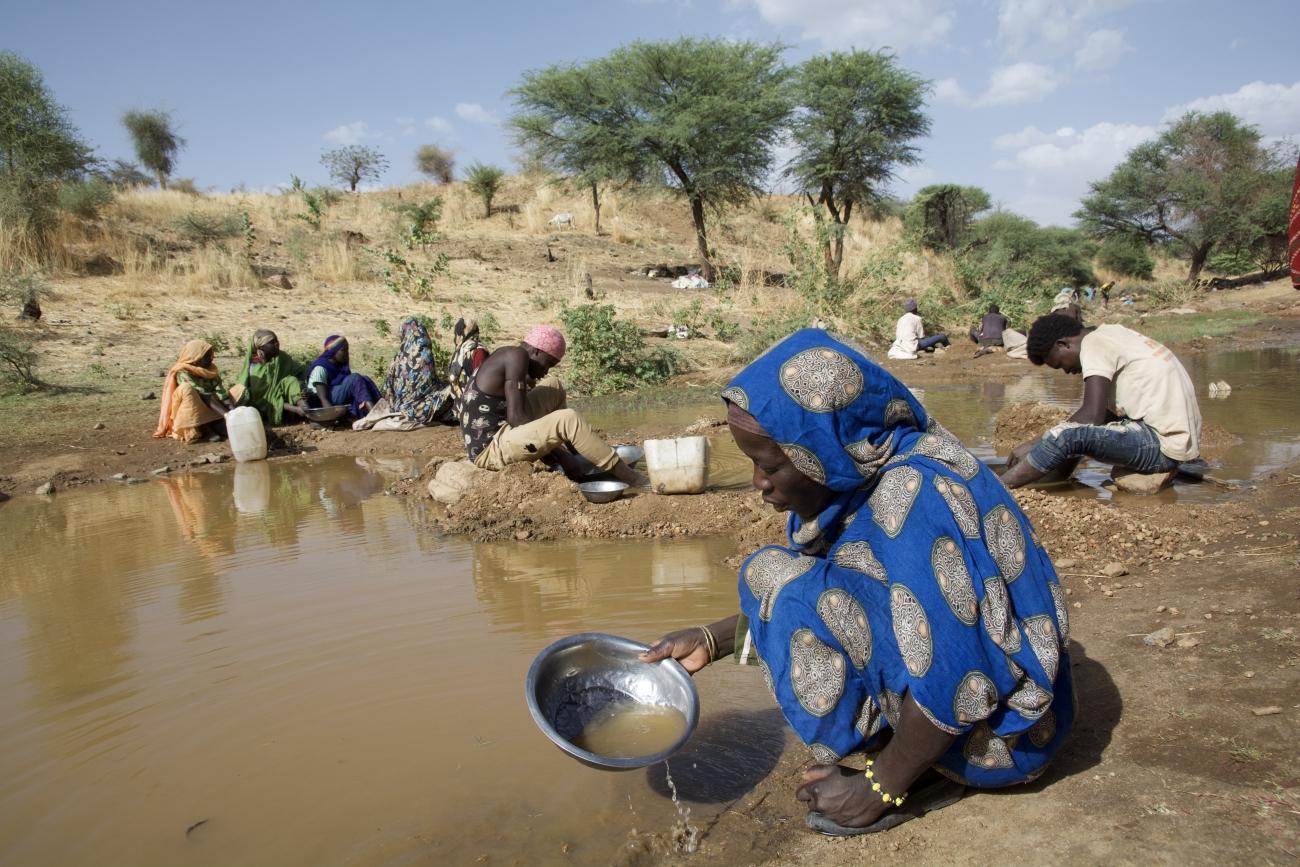
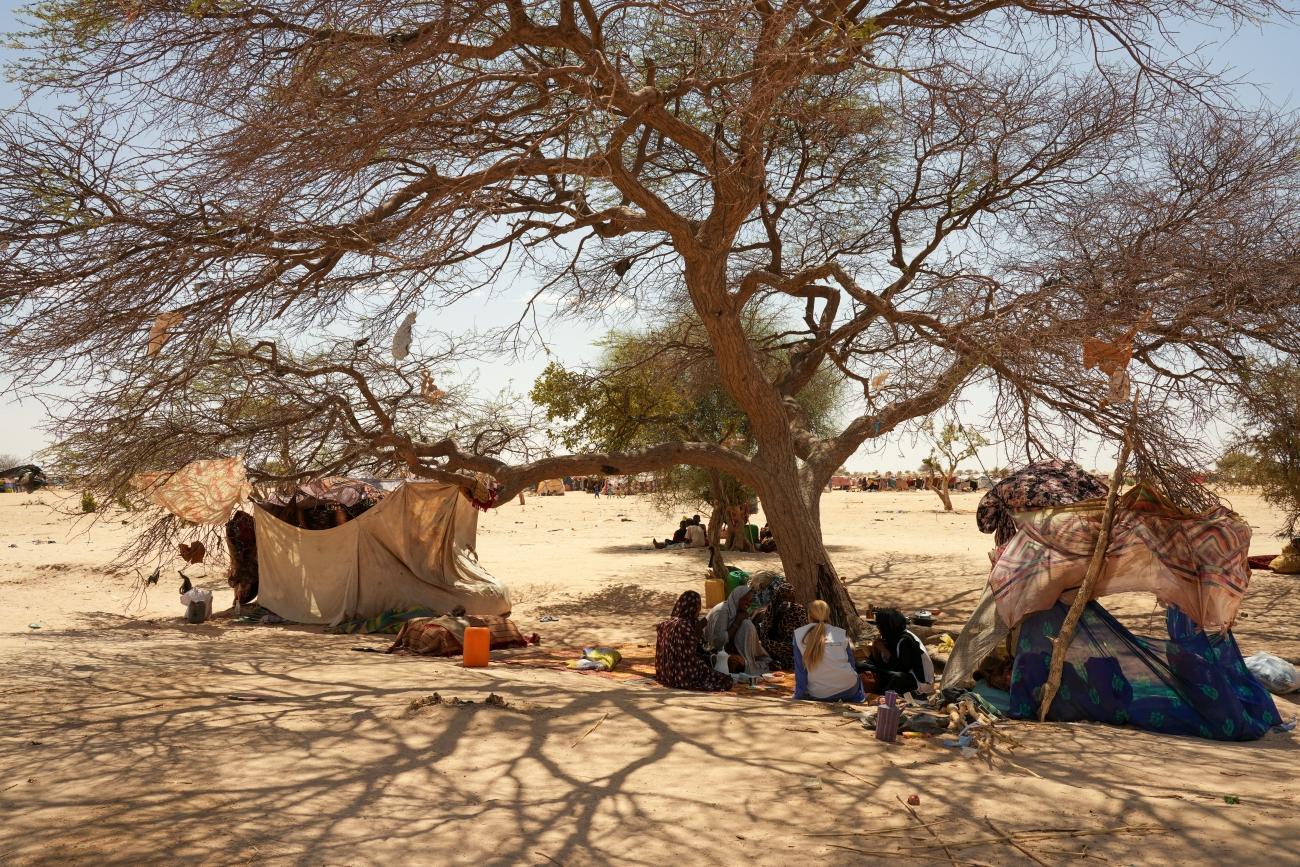
Life in the camps is precarious. Limited access to clean water, food shortages, and overwhelmed health services compound the trauma of displacement, while the rainy season further worsens living conditions, turning dust into mud and flooding makeshift shelters. Recent cuts to humanitarian aid have exacerbated the hardships faced by families already struggling to survive.
Since the conflict in Sudan began, more than 930,000 refugees, more than 80 percent of whom are women and children, have crossed the Chadian border to escape the fighting.
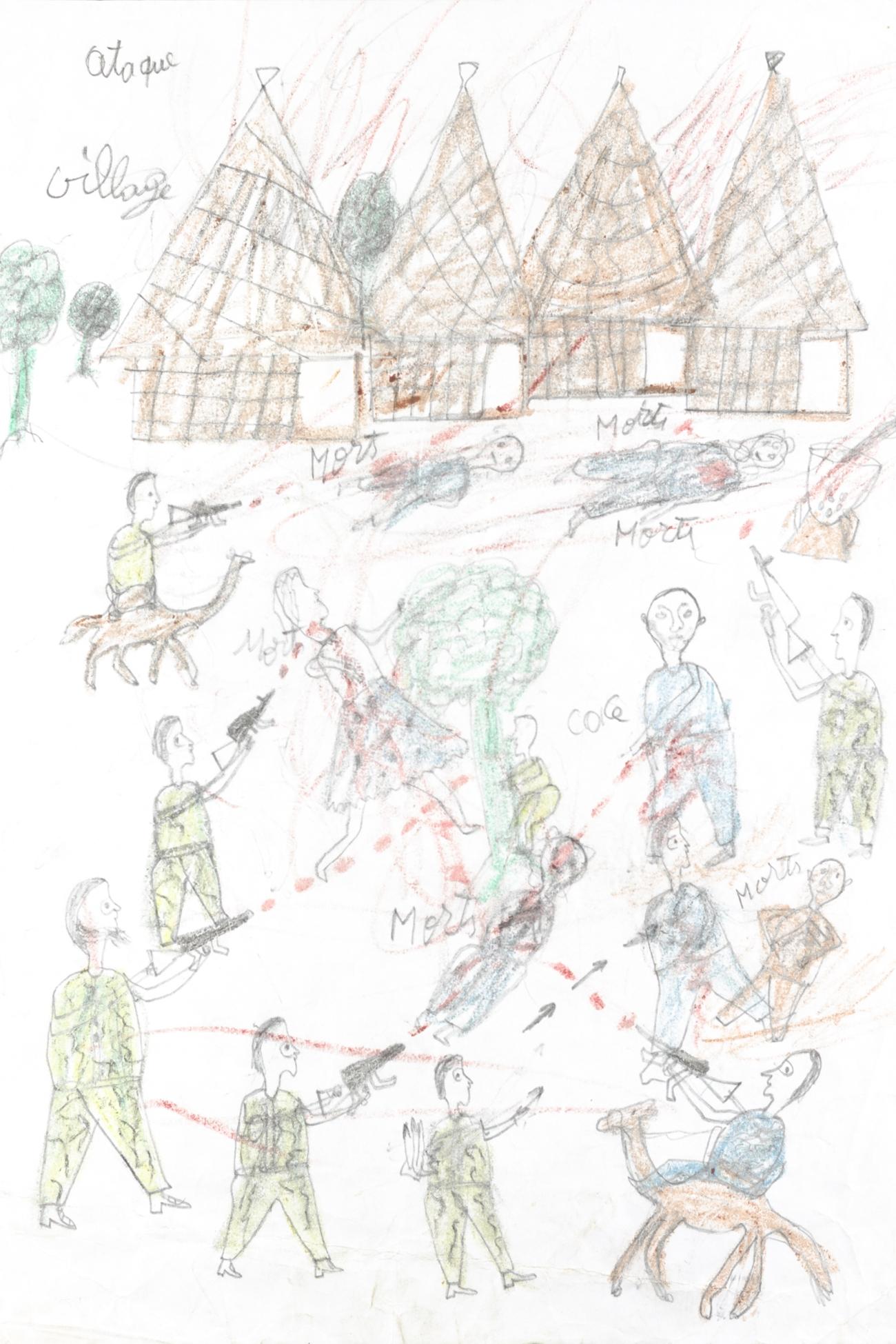
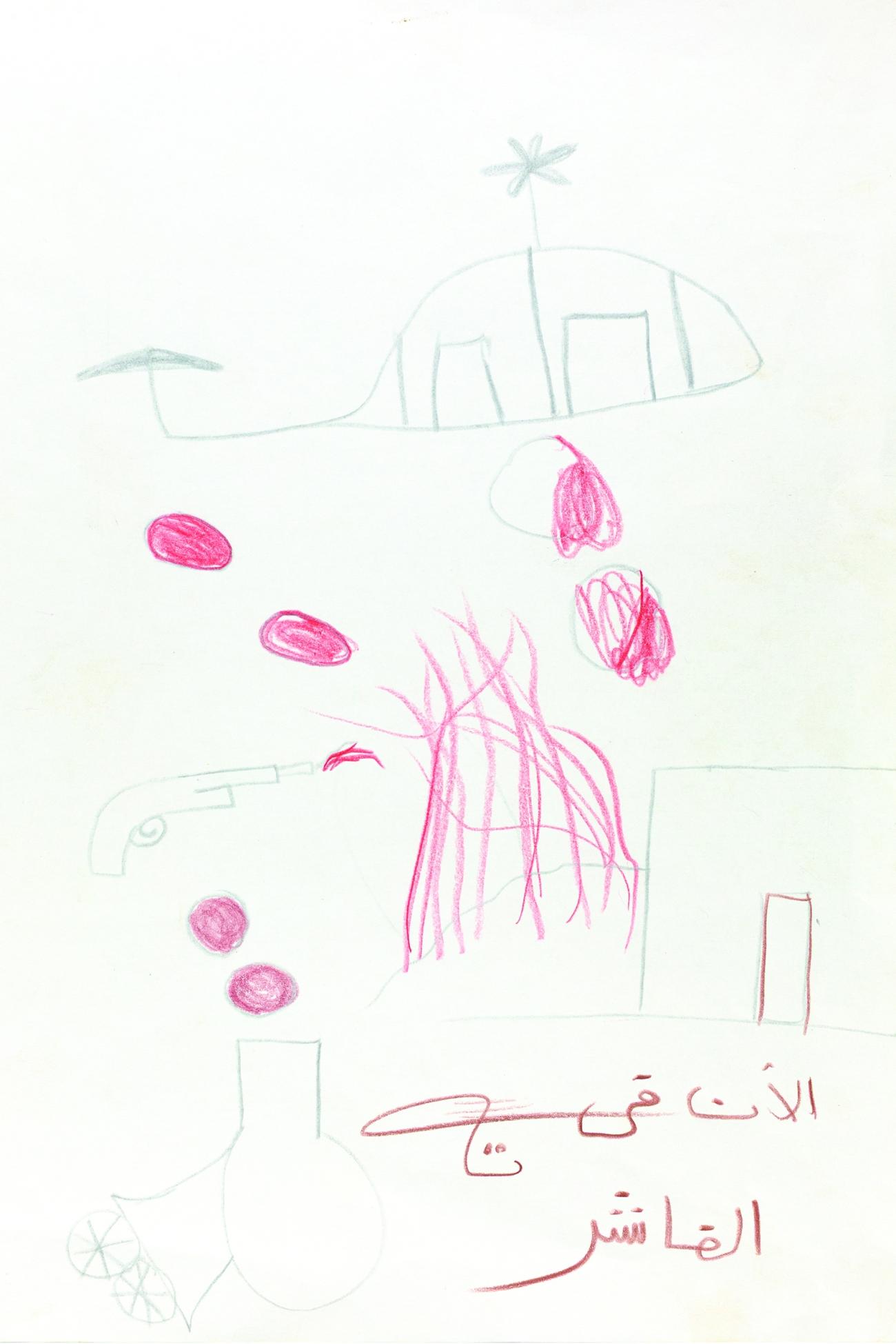
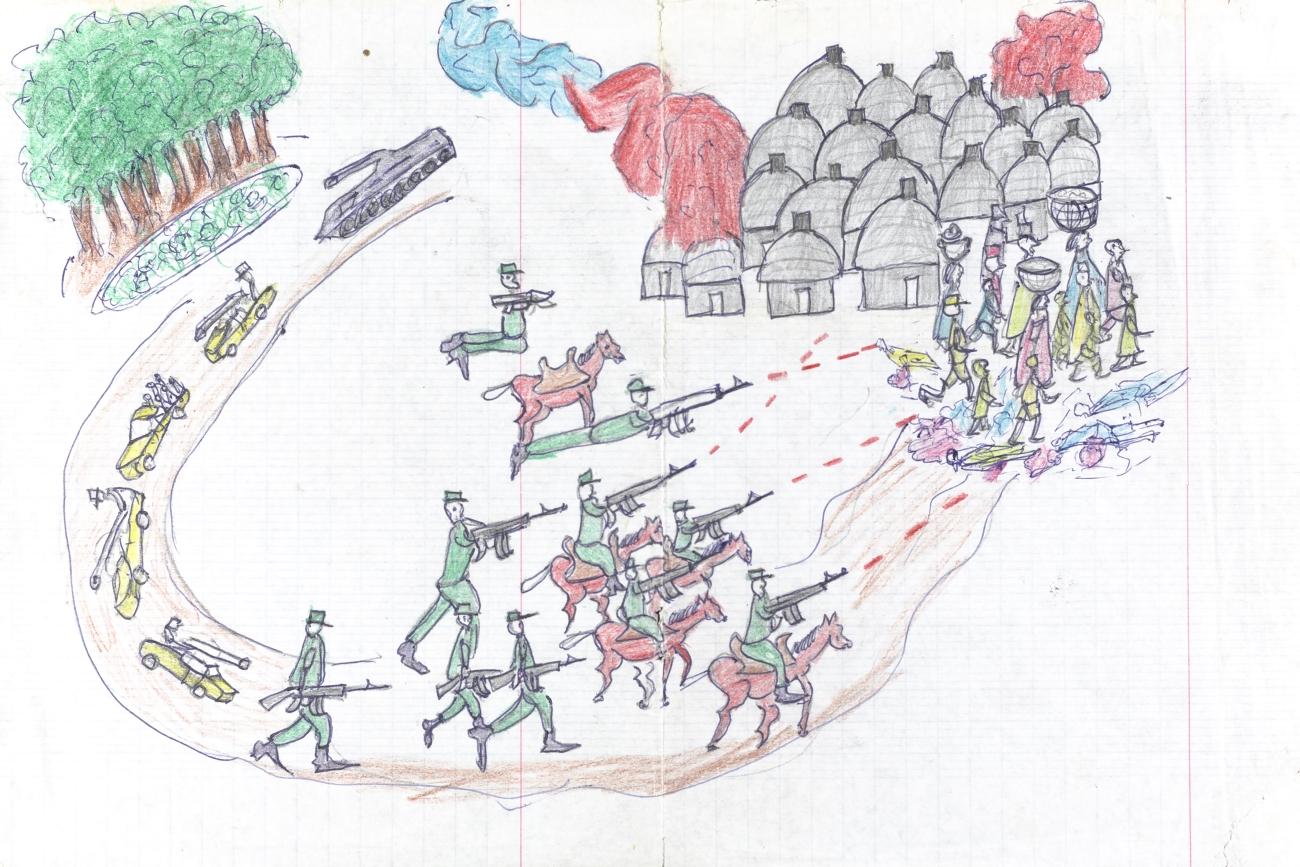
Survivors recount stories of detention, torture, and rape. They also told stories about being asked repeatedly, "What is your ethnicity?" Those who answered "Zaghawa" were systematically arrested or executed. Fewer than 100,000 people managed to flee El Fasher between November 2025 and January 2026, out of the 260,000 residents living there at the time of its fall.
Video
Noor had built his life in El Fasher, in Darfur, western Sudan. But it quickly became one of the most violent flashpoints in Sudan's raging war. And when the Rapid Support Forces (RSF) and their allies stepped up their attacks on El Fasher and tightened their siege, he was forced to flee, joining the exodus of thousands of others, among them Mawahib, Mohammed and Nasr. They are now living in neighboring Chad, bearing witness to the siege and destruction of their city.
You can see the full version of the documentary here:
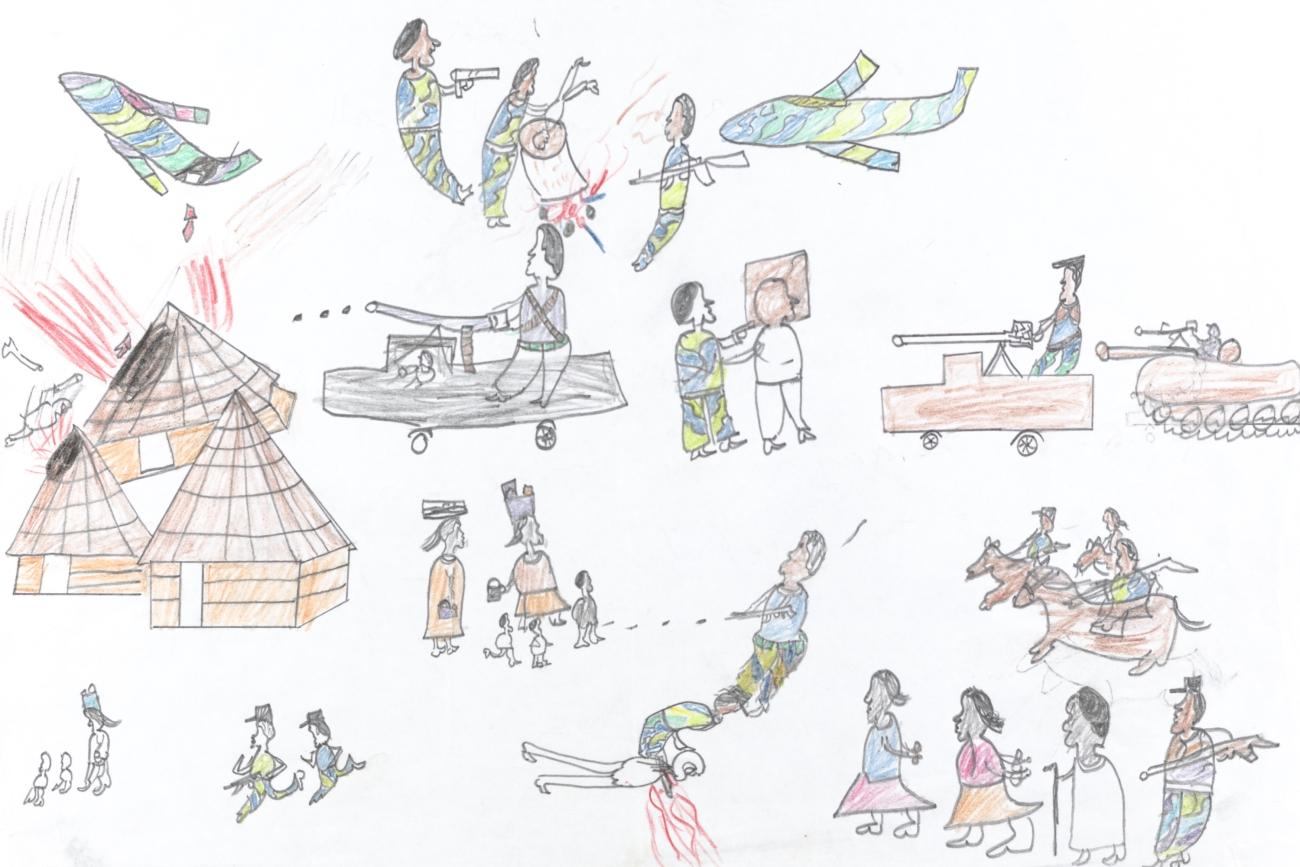
Stencil
"Where are all the missing people who had already survived months
of famine and violence in El Fasher?"
At the time El Fasher fell, MSF teams were present in Tawila, 60 kilometres away. In the week that followed, just over 5,000 people managed to reach Tawila. Aid workers on the ground have asked them about the fate of the tens of thousands of missing people. "Based on what patients are telling us, the most likely – albeit terrifying – answer is that they are being killed, detained, and hunted down as they try to flee," says Michel Olivier Lacharité, Head of Emergency Operations at MSF.